A dense Atlantic capital with direct flights to Europe, a fast-rising waterfront, a low long-term yield and real questions about federal land, salt and water.
FipeZAP put used apartments at R$ 12,965/m² in June 2026, and Sinduscon's August survey of new units was R$ 20,391, with the Beira Mar itself near R$ 23,900 in July.
Avenida Beira Mar: Sea-facing front row, with the highest new-build prices and the most outorga projects; check what can rise beside you.
Avenida da Abolição: The parallel inland avenue with a mix of older blocks, shops and a São Luiz supermarket; buses and traffic.
Rua Barbosa de Freitas: Wide spread on one street: a 153 m² unit near Rua Antônio Justa asked R$ 3.55 million and a 220 m² unit R$ 790,000.
Rua Ana Bilhar: On the Varjota side near the food hub; new developments and more evening noise.
Rua República do Líbano: Home to Hospital Monte Klinikum; useful for older owners, with ambulance traffic.
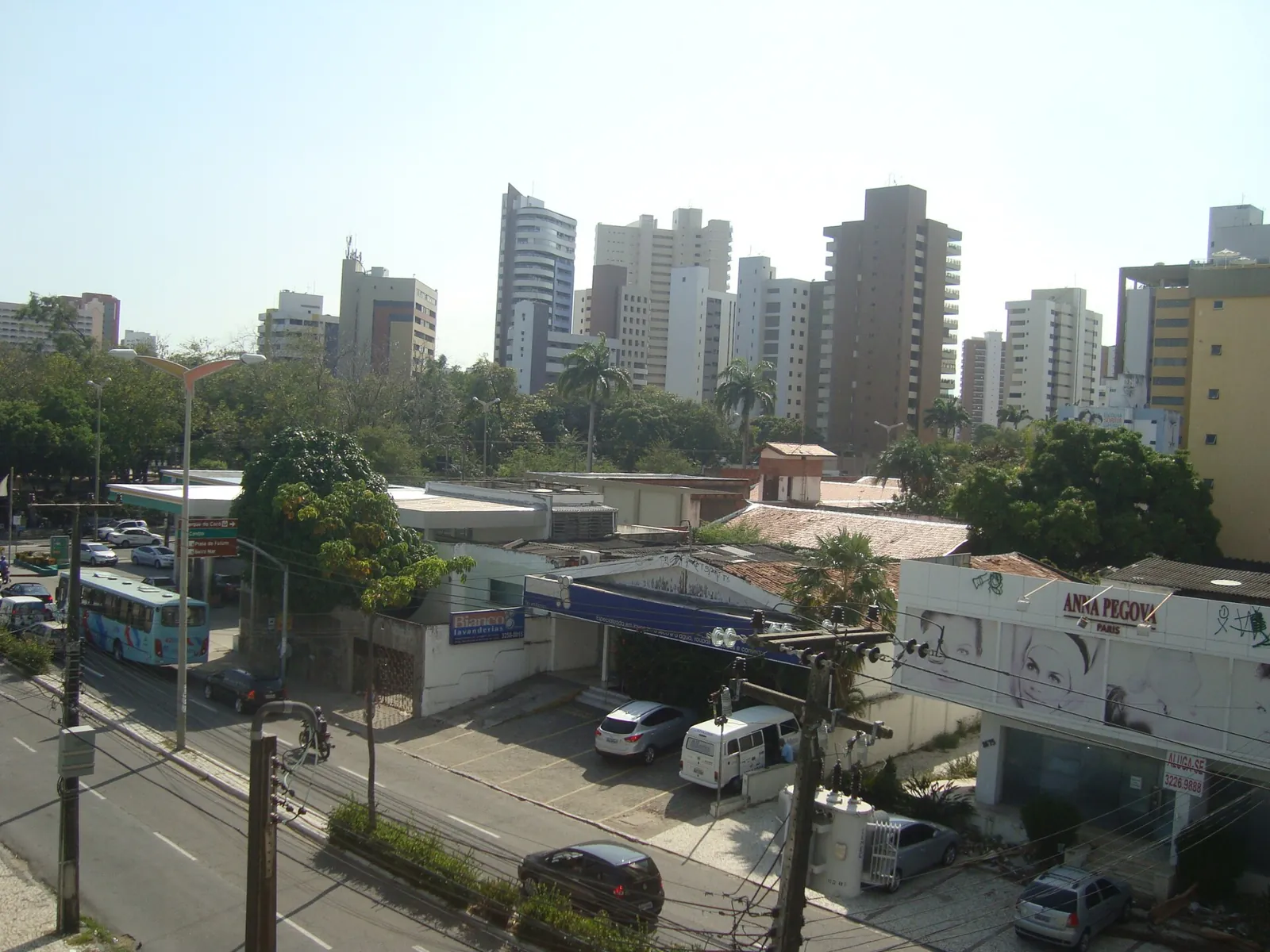
The inland office, clinic and school district behind Meireles, where a metro is being dug under Santos Dumont and large older apartments ask half a studio's square-meter price.
FipeZAP's June 2026 reading was R$ 11,673/m², up 18.2% in 12 months; median listings asked R$ 9,694 in November, and new units averaged R$ 16,660 in Sinduscon's August survey.
Avenida Santos Dumont: The main spine, with a bike lane, malls and a metro station; busiest and loudest address.
Rua Nunes Valente: Near the future metro station; expect work nearby until opening.
Avenida Dom Luís: Offices, clinics and the Pátio Dom Luís mall; useful for professional tenants.
Avenida Rui Barbosa: Connects the district to the Beira Mar; São Luiz planned a Mercadão here in 2024.
Rua Vicente Linhares: A 128 m² three-suite unit asked R$ 1.59 million in late 2026.
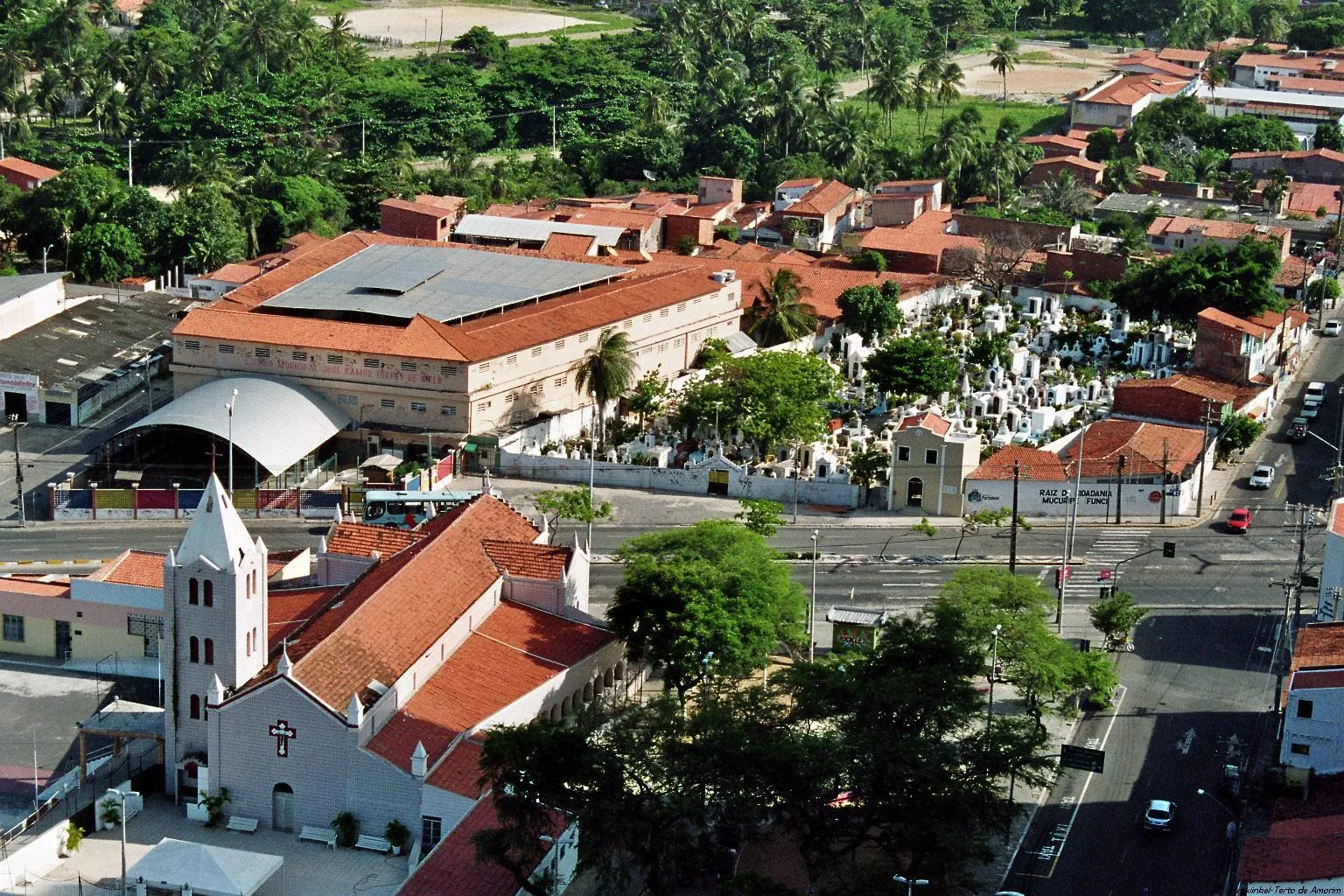
A former fishing village next to the port, now holding the city's tallest apartment buildings and a protected low-income zone, often within sight of each other.
A Corrida dos Bairros ranked it first in Fortaleza in November 2026 at a median ask of R$ 12,931/m²; Sinduscon's new units averaged R$ 20,529 in August, well above the city's R$ 12,350.
Avenida Beira Mar: Front row, with the Mercado dos Peixes and new-build prices above R$ 20,000 per square meter.
Avenida da Abolição: Main road with traffic; a general dividing line between the seafront and the back lanes.
Rua da Paz: One of the quieter streets, QuintoAndar says; compare building by building.
Rua Senador Machado: Near Parque Bisão and the tallest buildings; see the history of removals before buying.
Rua Comandante Prata: Quiet residential street per QuintoAndar; compare block by block.
Photo: Mucuripe 001 by Krewinkel-Terto de Amorim, CC BY 3.0, via Wikimedia Commons, resized
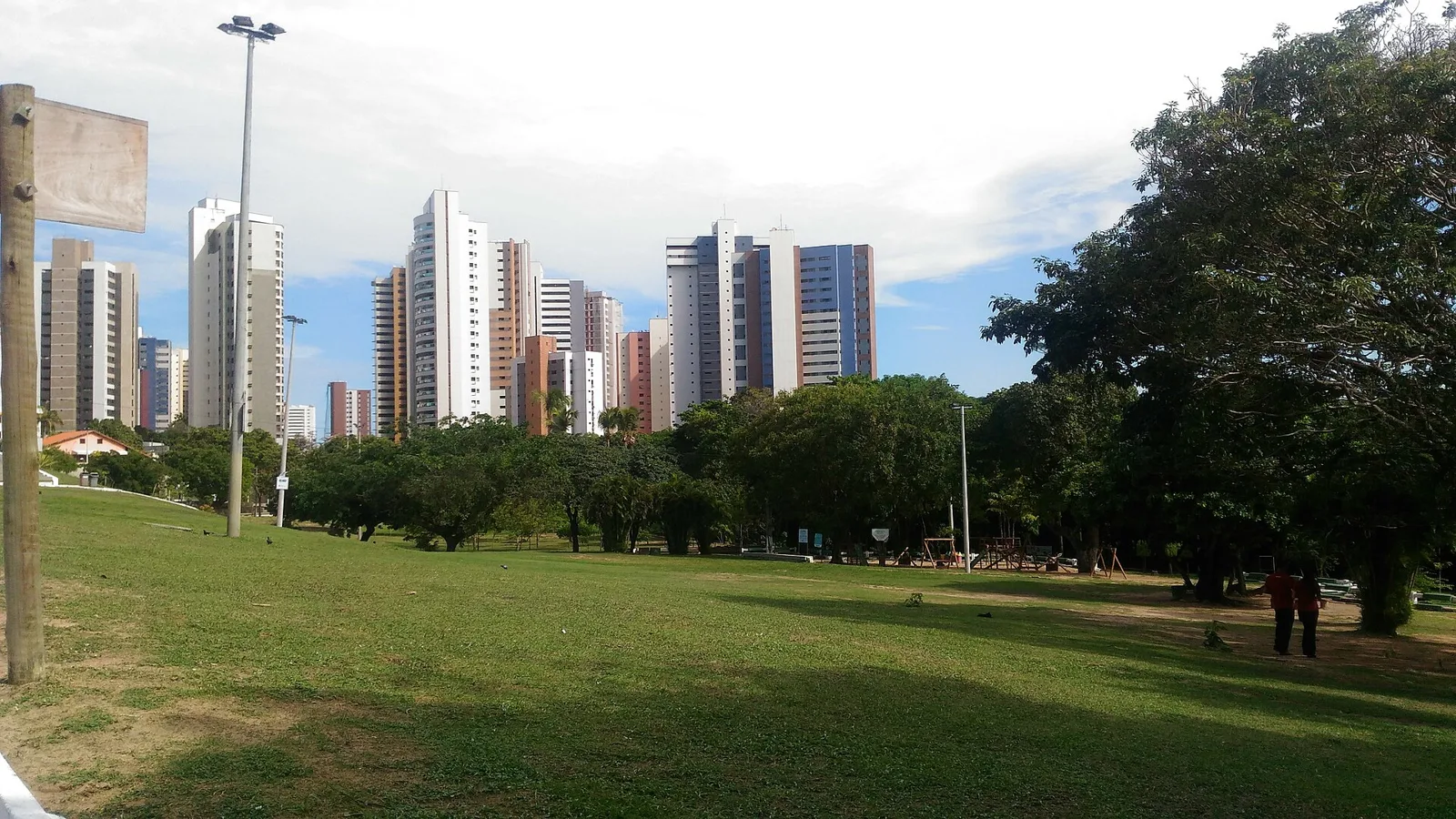
Modern mid-rise and high-rise apartments on the edge of a 1,500-hectare state park and between two big malls, with a car-based daily life and no beach.
Median listings asked R$ 9,939/m² in November 2026 and new units averaged R$ 13,449 in Sinduscon's August survey, above the citywide median but well below Meireles.
Avenida Engenheiro Santana Júnior: Main corridor toward Iguatemi, with a tunnel and a rush-hour bottleneck.
Avenida Padre Antônio Tomás: Links to Aldeota and has a park trail entrance; heavy traffic.
Avenida Sebastião de Abreu: Park boat and trail access; look at low-lying garages near the river.
Avenida Washington Soares: Southern artery past Iguatemi and toward Edson Queiroz, known for congestion.
Rua General Tertuliano Potiguara: Crossing point on Santana Júnior where signal timing was adjusted in 2025.
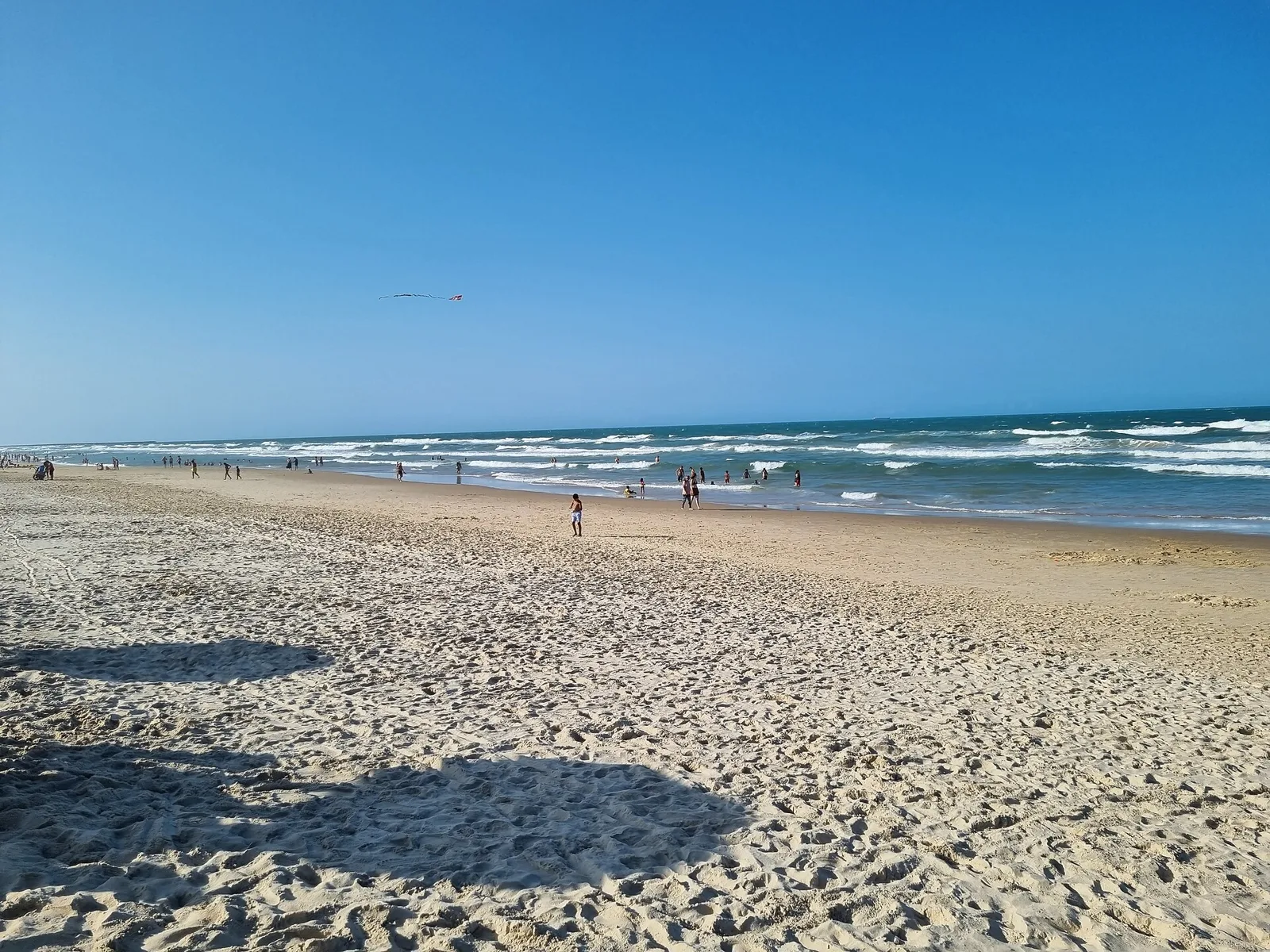
The long open-ocean beach east of the port, where low prices reflect severe salt damage, a federal court case over the beach clubs, thin services and a contested security picture.
FipeZAP read R$ 7,920/m² in June 2026, up 14.6% in 12 months, and median listings on A Corrida's Praia do Futuro page asked R$ 6,012 in November, below the citywide median of R$ 7,200, while its Praia do Futuro II page showed R$ 7,867.
Avenida Clóvis Arrais Maia: Hotel address near the sand and a popular search; expect maximum salt.
Avenida Pintor Antônio Bandeira: Listed by Apto.vc among the popular streets for new apartments, back from the sand.
Rua Coronel Francisco Montenegro: Also listed by Apto.vc among the popular streets; less exposed than the front.
Avenida Santos Dumont: The extension of the main avenue reaches here; fastest link to Papicu and Aldeota.
Rua Doutor Elizeu Holanda: Hotel street near the beach; older low-rise stock around it.
buyers who need nonstop flights to Lisbon, Paris or Madrid
retirees who want a level seafront walk in Meireles
long-stay owners who can vet a building's salt and fee history
kite and wind-season owners using the city as their base
Look elsewhere for
investors chasing a high long-term yield
anyone who wants a sea view that no new building can block
buyers who will not check federal land records on the first rows
Three price figures for one city
FipeZAP's September 2026 figure for Fortaleza is R$ 9,660 a square meter, roughly US$ 1,780, after a 10.2% gain over 12 months and 7.39% since January. A shopper will soon meet two other numbers, each built on a different sample. FipeZAP tracks asking prices for used apartments advertised online. The builders' union, Sinduscon-CE, working with the research firm Brain, tracks developers' new stock, which averaged R$ 12,402 from July to September 2026. A Corrida dos Bairros gathers listings monthly and shows a citywide median ask of just R$ 7,200 this November. When a broker quotes R$ 20,000 on the waterfront and a portal shows R$ 13,000 for the same district, nobody needs to be lying. The first is a new unit and the second is a 30-year-old apartment.
The trend is recent and strong, and it follows a bad stretch. Prices fell from 2017 to 2019, with an 8.07% drop in the last of those years, according to the FipeZAP history reported by O Povo. They later rose 11.49% in 2024 and 12.61% in 2025, when the national index gained 6.52%. Economist Mario Augusto Monteiro, in Diário do Nordeste, said the average may be inflated because most sales and launches happen in the expensive districts, and that developers prefer luxury units because the margin is better than on Minha Casa Minha Vida housing, the federal subsidized program.
The new-build volume tells a different story from that luxury image. From January through September 2026 Fortaleza and four neighboring municipalities sold 13,172 new units worth R$ 7.08 billion, and developers launched 14,517 units against 10,918 a year earlier. Minha Casa Minha Vida products of up to R$ 600,000 were the main sales driver, according to Sinduscon's statistics director. Unsold stock reached 15,548 units in August, up 30% in a year. Above R$ 3 million, by contrast, Brain counted only 492 unsold apartments in September. So the priciest band is thin and much of the fresh supply is modest, while the middle is getting crowded.
Rent is the odd part. FipeZAP's advertised rents rose 16.59% in 12 months, the largest increase among the 36 cities it tracks, yet the level is only R$ 42.22 per square meter a month and the gross yield is 4.92%. Only Curitiba matches it at the bottom of the capitals listed here, while FipeZAP has Natal at 8.03% and Recife at 8.3%. In round numbers, FipeZAP's averages price a 100 m² apartment at R$ 966,000 and rent it at R$ 4,222 a month. Buyers who want rental income should run the sum on the actual unit.
Nobody seems to publish how many foreigners buy in Fortaleza; no count turned up in this research. Economist Davi Azim Filho, quoted by O Povo in January 2026, named smaller households, the waterfront and outside investors as the main demand. Tourism is a separate signal: Ceará recorded 97,693 foreign tourist arrivals from January to September 2026, up 23%, and the airport handled 293,283 international passengers from January to July, up 11.7%.
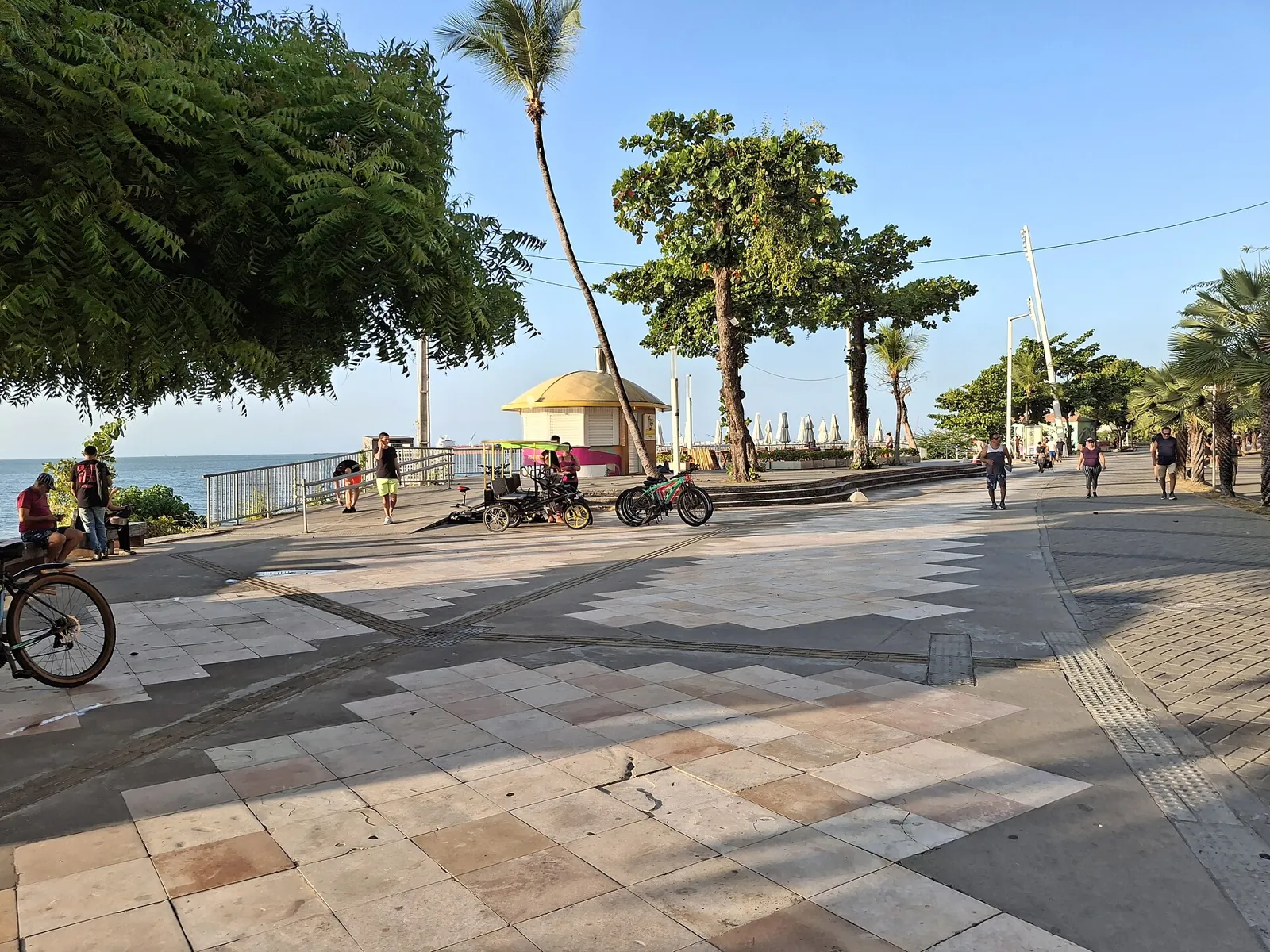
FipeZAP sale index, September 2026 report. 2026 is the 12 months to September. Inflation is not removed.The Beira Mar boardwalk in Fortaleza, rebuilt after the sand fill of 2019.
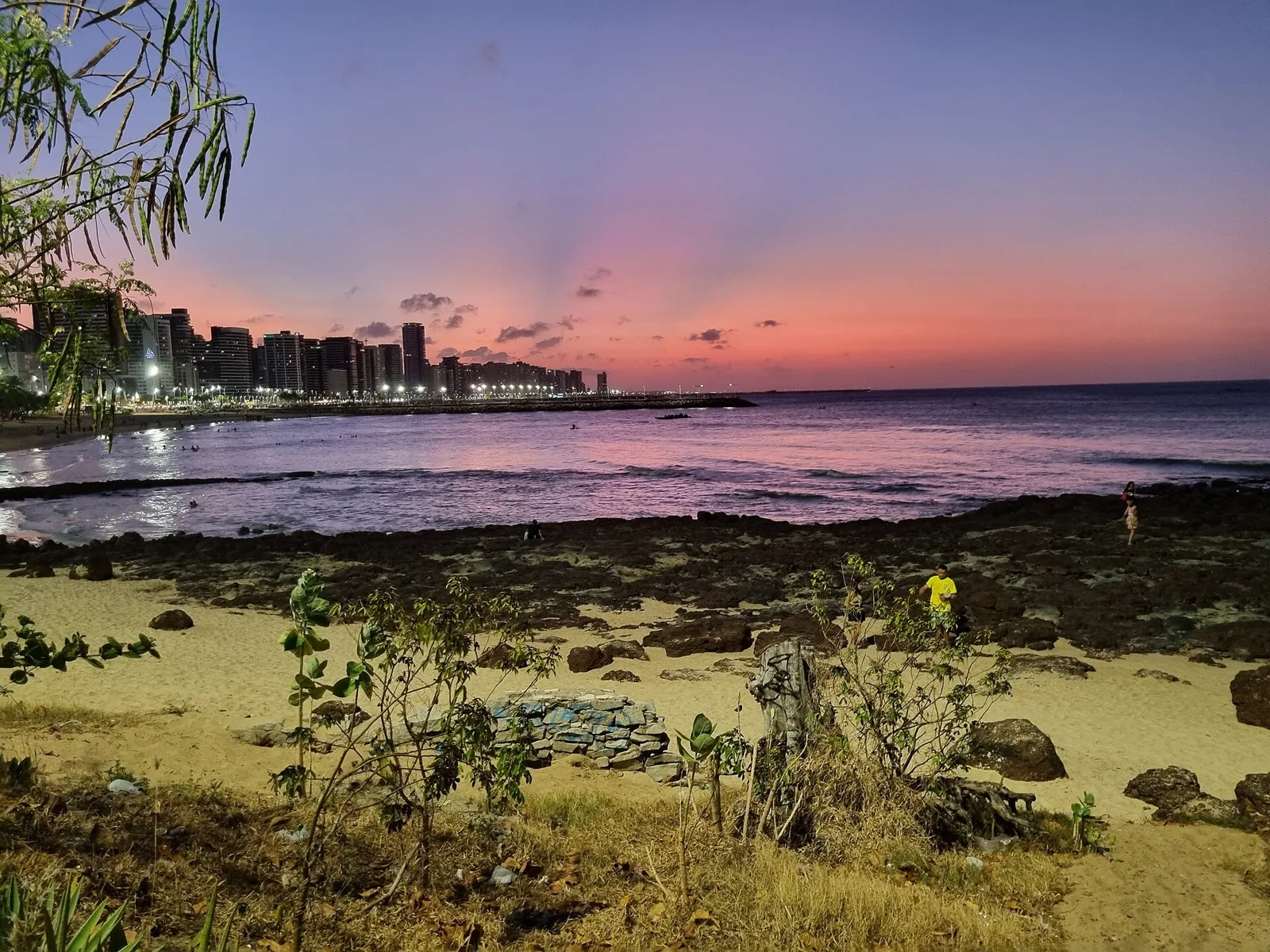
Fortaleza is a dense city of 2,428,708 people in the 2022 census, squeezed into 312 km², with about 34.6 km of coast. That count put it ahead of Salvador's 2,417,678. For a buyer the map comes down to one fact: Mucuripe port sits on a point of land and splits the shoreline into two very different coasts.
West of the port
From the port westward runs the protected, built-up waterfront that visitors know, the Avenida Beira Mar. Its first section opened in the early 1960s, and it now runs past Praia de Iracema, Meireles and Mucuripe. Beira Mar is a street and not a neighborhood, although Sinduscon's survey treats it as one, because it prices so far above everything else. Farther west, past the Centro, the coast has eroded, a Uece study says, and zoning at places such as Pirambu and Barra do Ceará allows only about 15 meters of height in many parts.
East of the port
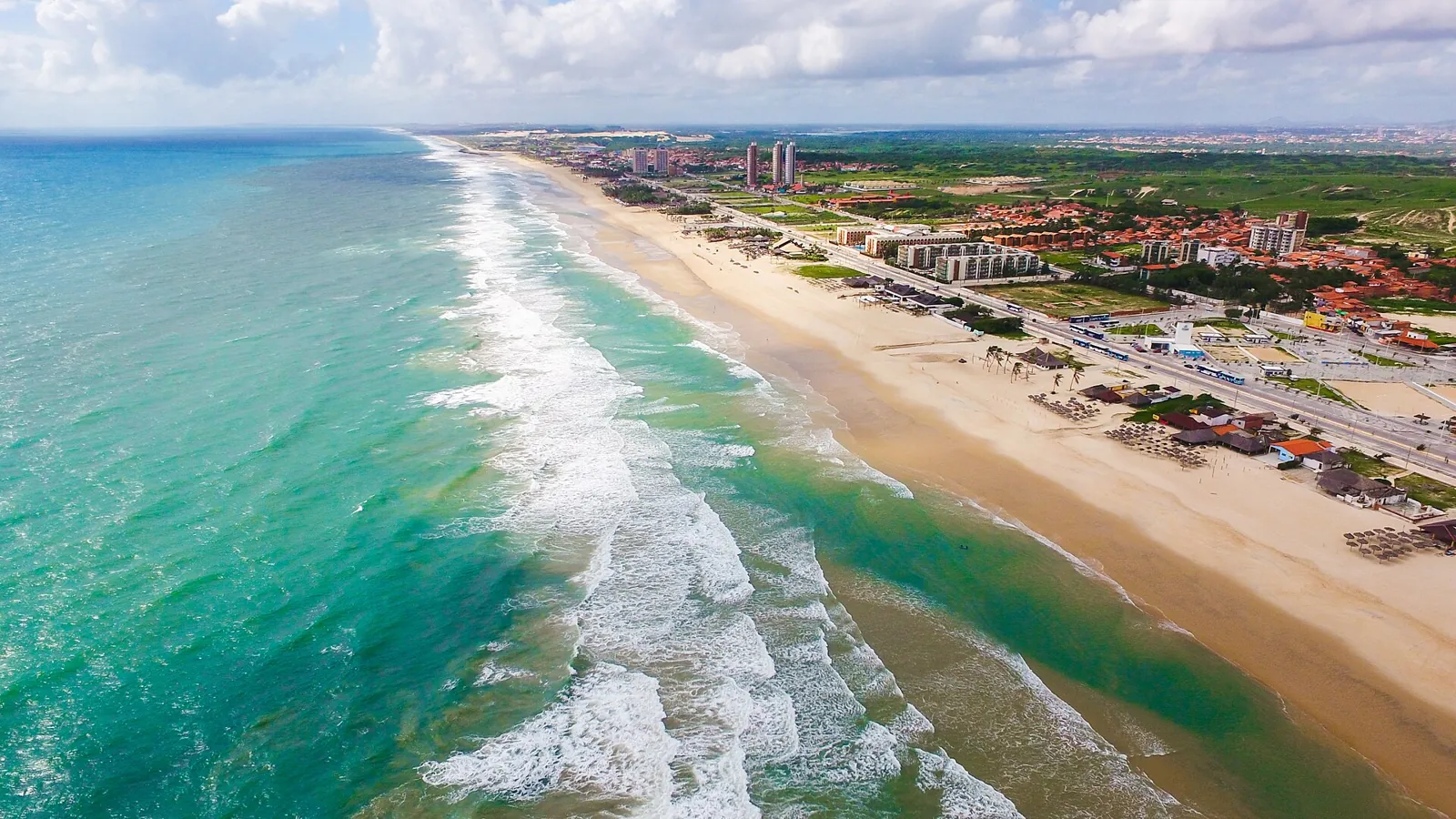
Past the port the coast turns to face the open ocean. Praia do Futuro runs for about 8 km toward the mouth of the Rio Cocó, split officially into Praia do Futuro I and II, with low-rise housing, beach clubs on the sand, and a much stronger salt load. Prices drop accordingly, as the next chapters show.
Inland
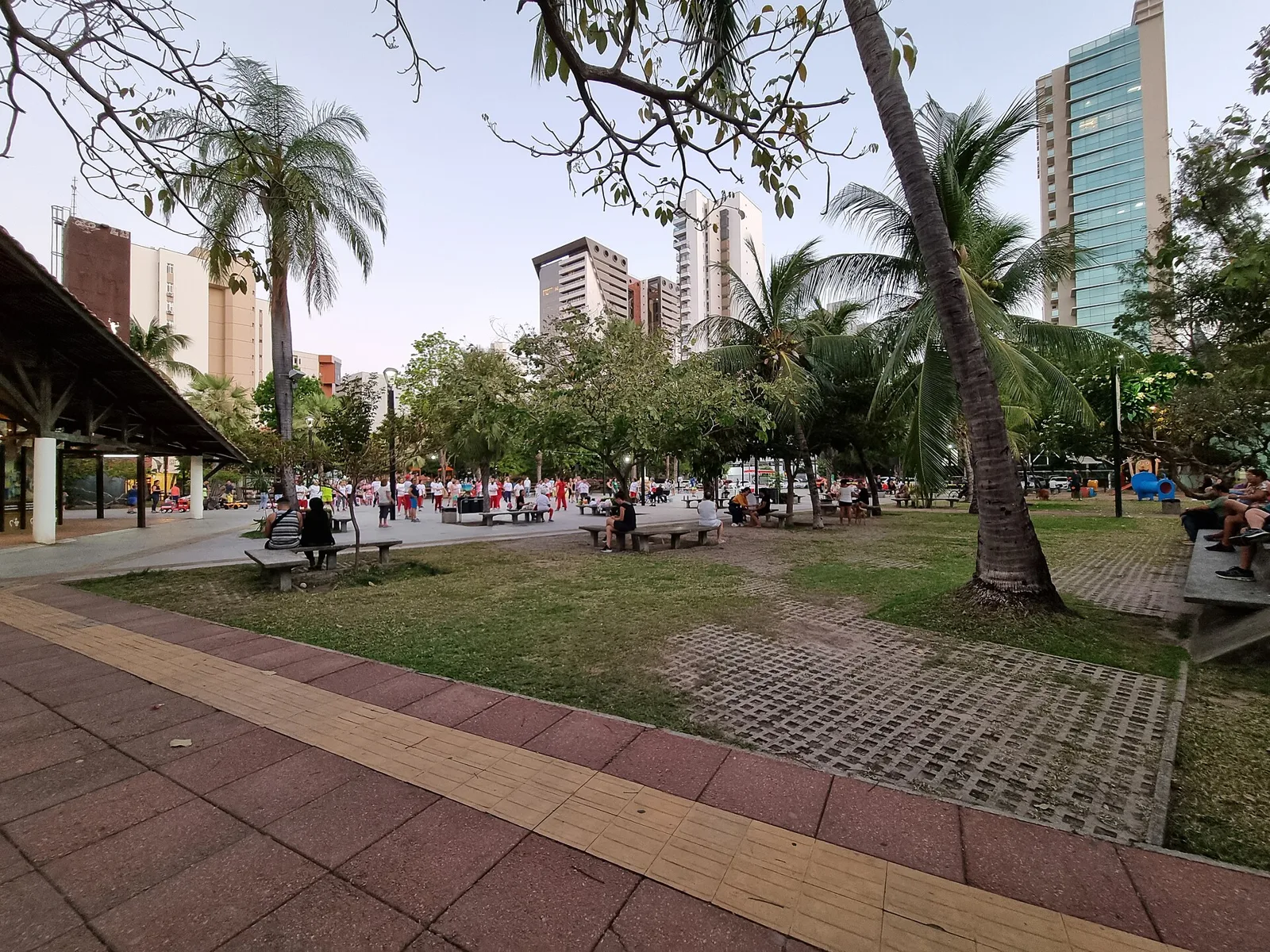
Behind Meireles lies Aldeota, the older upscale district about 2.1 km from the Centro, along with Varjota, Dionísio Torres, Fátima and Joaquim Távora, mostly apartment territory. Farther southeast is Cocó, built around the state park and the river, with a big mall on either side, Iguatemi Bosque and RioMar Fortaleza. Beyond that the city continues toward Edson Queiroz, Guararapes and Engenheiro Luciano Cavalcante along Avenida Washington Soares, where new-build prices now pass those of many older central districts.
The south and west are a different economy. Sinduscon's cheapest list for the second quarter of 2026 runs from Parque Santa Filomena at about R$ 4,030 per square meter to Parangaba at R$ 6,131, a gap of almost six times between that low end and the waterfront's top figure.
The metropolitan fringe
Many second-home buyers end up outside the city limits. Sinduscon's second-quarter 2026 figures for vertical housing show Aquiraz at R$ 11,867 per square meter, close to Fortaleza's own R$ 11,977, with Caucaia at R$ 6,392, Eusébio at R$ 6,116 and Maracanaú at R$ 5,409. Cumbuco, the kite beach, belongs to Caucaia. Canoa Quebrada and Jericoacoara are full trips away along the coast, each with its own land questions.
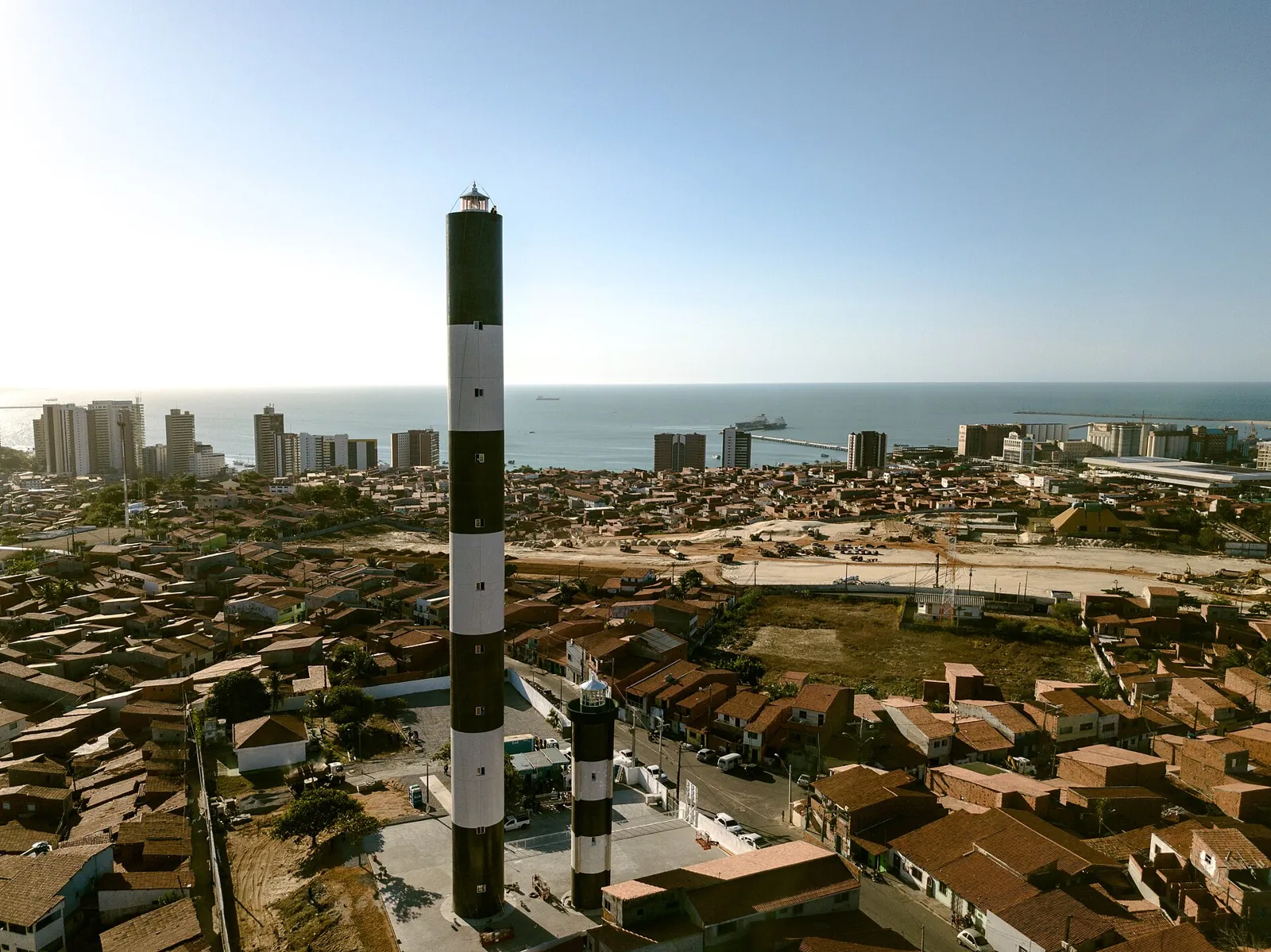
Check names on paper. The Farol do Mucuripe lighthouse, for example, stands officially in Cais do Porto. Sellers use the better-known neighbor on an ad, and the tax bill and zoning follow the official boundary.
The striped Mucuripe lighthouses above low-rise streets, with high-rises and the port on the water beyond.
Apartment living is the default in the prime districts. In the 2022 census 93% of occupied homes in Meireles and Cocó were apartments, and 86% in Aldeota. Mucuripe is more mixed at 65%, because fishing-era houses and old lanes survive between the high-rises.
How the waterfront grew
The city code allowed only three floors on the waterfront in the 1950s. Heights reached 12 floors in the early 1970s and 18 by the end of that decade, about 72 meters, with some 120 buildings standing there by then, Diário do Nordeste reports. Much of the resale stock along Beira Mar and in Aldeota dates from those years and the decades after. As a general observation these are large apartments, often with staff rooms, and they account for a big share of what is for sale. In November 2026, 580 of the 999 Meireles apartment listings tracked by A Corrida dos Bairros were above 150 m².
Since 2015 a paid exception has changed the skyline, as a later chapter explains. The tallest buildings now reach about 170 meters in Mucuripe. O Povo reported in 2025 that apartments in that class start around R$ 9 million, and one 78-unit project on Beira Mar promises at least four parking spaces per apartment. At the other end, developers now sell compact units of 35 to 60 m² on a mixed long-let and nightly pitch, O Povo wrote in 2023.
What size does to price
Price per square meter runs backward from what a newcomer expects. A Corrida dos Bairros' November 2026 medians show it:
Median asking price per square meter by apartment size, November 2026
Size
Meireles
Aldeota
Cocó
Up to 50 m²
R$ 16,405
R$ 14,113
R$ 11,333
50 to 70 m²
R$ 14,536
R$ 13,315
R$ 9,908
70 to 100 m²
R$ 11,336
R$ 11,100
R$ 10,000
100 to 150 m²
R$ 8,829
R$ 7,170
R$ 8,291
Above 150 m²
R$ 11,990
R$ 7,280
R$ 11,638
In Aldeota a large older apartment asks about half the square-meter price of a studio. That gap is the main value question in the city, and it likely reflects in part the cost of an old building: an aging facade, an old elevator and a fee that buys fewer modern amenities.
What the monthly fee runs to
As a general observation, the condomínio, the fee every owner pays for staff and upkeep, tracks a building's age more than its location. No published fee survey for Fortaleza was found. The one ad opened for this guide that shows a fee is a 153 m² apartment on Rua Barbosa de Freitas in Meireles, in a block of 40 floors, at R$ 1,100. Advertisers write these numbers, so request recent statements and read them with the condominium fee guide.
Inspection certificates and the Edifício Andrea
Municipal Law 9.913 of 2012 requires periodic inspection of residential buildings with three or more floors. The city's urban office sets the rhythm by age: every year over 50 years old, every 2 years from 31 to 50, every 3 years from 21 to 30, and every 5 years up to 20. A qualified professional files a technical report, and the resulting Certificado de Inspeção Predial must be displayed where residents can see it, so look for it in the lobby. On 15 October 2019 the Edifício Andrea in Dionísio Torres collapsed during work on its pillars, killing nine people. The forensic report listed faulty renovation technique, unshored pillars, rooms added on the roof and inadequate maintenance over the building's life. Calls about risk of collapse peaked at 2,391 that year.
Older districts still generate those calls: from 2012 to July 2025 the civil defense logged about 469 building-related incidents in Aldeota and 460 in Meireles, near the top of the city's list, though the civil defense coordinator puts Aldeota's figure down to preventive upkeep and not to worse buildings. Ask for the engineer's report behind the certificate before you make an offer. Buyers before completion have a separate list in the off-plan guide.
A commercial avenue in Aldeota, with apartment buildings from several decades behind the shops.
Three published series cover the districts in this guide. None of them records actual deeds, and they disagree by large amounts, because they measure different stock.
Published price per square meter by district, 2026 (R$)
District
FipeZAP, used listings, June
Sinduscon and Brain, new units, second quarter
A Corrida dos Bairros, median ask, November
Beira Mar (the avenue)
not reported
23,699
not reported
Mucuripe
not reported
20,217
12,931
Meireles
12,965
20,172
12,253
Aldeota
11,673
16,555
9,694
Dionísio Torres
8,864
14,466
not checked
Fátima
8,885
14,158
not checked
Cocó
not reported
13,171
9,939
Engenheiro Luciano Cavalcante
10,459
not in top ten
not checked
Praia do Futuro
7,920
not in top ten
6,012 (its Praia do Futuro page; 7,867 for Praia do Futuro II)
Papicu
6,659
not in top ten
not checked
Citywide
9,411
11,977
7,200
FipeZAP's September citywide figure, R$ 9,660, is the one used elsewhere on this site. The June column above is the last month for which district figures were found in the press, so it reads a little lower.
Three things stand out. Aldeota jumped 18.2% in FipeZAP's 12 months to June 2026, after 24.7% in 2025, and it has been catching up with Meireles from below. Papicu fell 2.6% in the same June reading, the only decline on that list, and it also fell 8% in 2025, yet MySide's table from a later FipeZAP report shows it up 20.4% over 12 months, so a single reading proves little. Papicu also saw faction conflict in 2025, as the safety chapter records, though no source links the two. Praia de Iracema is a warning about averages: Sinduscon's figure jumped 53.94% in one month, from R$ 14,095 to R$ 21,698, because only 16 units were in stock and luxury units entered the sample in August. Treat any single-month move in a thin district as noise.
To compare the coast of the Northeast, also look at Ponta Negra in Natal and Ponta Verde in Maceió, where FipeZAP's citywide base differs: R$ 6,465 in Natal and R$ 10,061 in Maceió against R$ 9,660 here. And Boa Viagem in Recife belongs to a city where FipeZAP's yield is far higher. For real prices, ask to see the ITBI value on the last sale in the building, and browse current listings and the asking-price index as a starting point only.
Who rents and what tenants pay
Long-term rents started from a low base. In June 2024 FipeZAP's average for a 100 m² apartment was R$ 3,006 a month, the lowest of any capital FipeZAP covers, and researcher Érico Veras tied that to lower household income in Ceará compared with the Southeast. The climb since then: 12.45% during 2025, followed by 16.59% over the year to last September. Remember that this index reads asking rents for new contracts, not increases on existing leases, so a landlord's actual rent roll moves more slowly.
The ranking inside the city is not what the sale prices suggest. FipeZAP's 2024 list, the latest full ranking found, priced 100 m² in Mucuripe at R$ 50,880 annually, ahead of Engenheiro Luciano Cavalcante at R$ 48,840 and Meireles at R$ 47,880. Aldeota came in at R$ 35,760, Cocó at R$ 33,240 and Papicu at R$ 28,800. Those figures exclude fees and have since risen.
A Corrida dos Bairros' late-2026 listings give a fresher reading: medians of R$ 59.70 per square meter monthly in Meireles, R$ 57.50 in Mucuripe, R$ 51.40 in Aldeota and R$ 41.40 in Cocó. Its typical rental is much smaller than its typical sale, 73 m² against 183 m² in Meireles. That difference may help explain why the city's gross yield looks so poor, though FipeZAP's figure comes from its own sample. As a general observation, tenants pay for compact, modern units, and large older apartments rent slowly.
Guarantees follow the national pattern. No Fortaleza or Ceará survey of guarantee types was found. The national menu applies: a fiador, a guarantor with solid finances and ideally property nearby; a deposit typically capped at about three months' rent; or seguro-fiança, a rental guarantee insurance. A lease may require only one of these. A foreign owner should have a local property manager vet the guarantee and handle the IPTU pass-through, and should go through the rental tax rules for non-residents before setting net-return expectations.
Demand clusters by employer and lifestyle. Cocó's new mid-size buildings draw professional households who drive to work, and Aldeota draws doctors, lawyers and office workers around Pátio Dom Luís and the private clinics, as a general observation. Near the sea, furnished apartments compete directly with nightly rentals, so vacancy depends on the season. Praia do Futuro apartments of 35 to 60 m² were pitched by developers in 2023 at R$ 2,500 to R$ 4,000 a month, a sales projection and no more. A check of what comparable units have actually rented for is worth more than any brochure.
Nightly rentals without a city rulebook
No municipal law regulating short-term rentals in Fortaleza was found for this guide, as of November 2026. In 2017 the city council added an amendment to a tax bill to charge ISS service tax on lodging platforms. Airbnb blamed hotel lobbying and called the amendment unconstitutional, and whether it survived in force could not be confirmed. A newer bill, filed in April 2025 by a councilman who has since left for the state assembly, was reported in September 2025 as stalled. So the practical rule is set inside each building: read the convention and the minutes, because under national case law a condominium can restrict the use. The short-term rental rules guide sets out that position.
Airbtics tracks Airbnb alone. Its latest 12-month window closes in August 2026 and shows:
3,734 active listings, up 55.5% in a year
a nightly average of R$ 296, up 31.8%
63% occupancy, down 6%
July as the busiest month and May the slackest
Meireles listings earning 6% over the city
the highest occupancy, 65%, on one-bedroom units
Listing growth of 55% is the number to sit with. Rates rose anyway in that period, but occupancy is falling and more supply is on the way, since studios are a favorite of current launches. As a general observation, July's peak owes a lot to Brazilian school holidays, and it arrives just before the strongest wind on the state's coast. May falls at the tail of the rains. Ask to see the real bookings of any unit you are buying.
The Airbtics revenue figure, about R$ 70,000 a year for a typical listing, is gross and before fees, cleaning, furnishing, condominium, IPTU and tax. No published yield for short lets in Fortaleza was found, so none is given here. Double-digit beachfront yields have been claimed for this market, and none could be traced to a published source. To estimate your own number, take comparable listings' calendars for a full year, the building's fee and your furnishing cost, then subtract the platform's commission and income tax.
Critics also tie short lets to rising housing costs, as economist Mario Augusto Monteiro did in Diário do Nordeste in 2026, so regulation remains a live political subject. Three federal questions remain open as this is written. Sending rent or sale money abroad may or may not attract the 3.5% IOF. Non-residents over the limits may or may not fall under CBS and IBS. And the R$ 600 deduction for short lets has no settled reading. Ask a tax adviser before you count on any answer.
Short-let arithmetic
Starts from published figures (12 months to August 2026 (Airbtics, Airbnb listings only)). Set your own.
Fortaleza's transfer tax has a quirk that many generic calculators get wrong. Sefin, the city finance office, says on its ITBI page that the rate is 4%, and that it falls to 2% when the tax is settled before the escritura, the public deed, is drawn up, no later than the day before. Pay late and the full rate applies. The published texts disagree on that full rate: article 306 of Lei Complementar 159/2013 and article 856 of the city's tax regulation both show 3%. No amending law was found to explain the gap, so treat 2% as the target and ask Sefin which full rate applies if you miss it. A national calculator such as Boa Conta shows a flat 3% and no 2% window.
The base is the market value set by the city, the value you declare if higher, or the IPTU value if that is greater, Sefin says, so it may come out above your price. To contest it you file a reavaliação, a reassessment, within 30 days of the notice, with at least two of the documents Sefin lists, such as a recent technical report or ads for similar homes. A refusal can go to the city's tax tribunal, the CAT, within another 30 days. Courts elsewhere have limited how far a city can override a declared price, and a São Paulo court held in May 2026 that Complementary Law 227/2026 did not end that protection. No Ceará ruling on the point was found. A brokerage invoice issued through the city's system reduces the base by its amount. The tax may be split into three monthly installments without interest, or six with interest at the Selic rate.
Two reductions matter. Loans under the regulated mortgage system, the SFH, get 0.5% on the borrowed sum, up to R$ 390,672.24 in 2026 on Sefin's page, while the older published texts show R$ 200,000. And on property held under emphyteusis from the federal government, the code and regulation put the base at 83% of market value, or 95% on other foreiro property, a detail that says a lot about how common these titles are along this coast. Sefin's page does not repeat this, so confirm it before you count on it. See the land chapter below.
A worked example at one million reais
Cash purchase of a freehold apartment priced at one million reais, 2026
Cost
Reais
Comment
ITBI at 2%, paid before the deed
R$ 20,000
R$ 40,000 at Sefin's 4% if you pay late
Escritura
about R$ 3,760 to R$ 4,720
Ceará's 2026 table caps the fee; the range reflects two readings of the cap
Registration
about R$ 2,570 to R$ 4,850
Same point, plus small add-ons such as prenotation at R$ 78.55
Total
about R$ 26,300 to R$ 29,600
2.6% to 3.0%, before lawyer and certificates
Ceará's notary and registry charges are low on expensive homes because the table flattens out at a low value, so check the notary's own quote. The closing costs guide compares the cities.
IPTU changes for 2027
The annual property tax uses the city's own assessed value, the valor venal, whatever you paid. Residential bands for 2026 are 0.6% up to R$ 113,917.65, 0.8% (less R$ 227.82) up to R$ 410,103.52, and 1.4% (less R$ 2,688.44) above that. So an assessment of one million reais means about R$ 11,312 a year. Single-payment discounts in 2026 ran from 8% in February to 4% in April.
Two changes are worth watching. Aerial images taken in 2023 led the city to update about 100,000 properties, 11% of its 870,000, for 2026. Most bills rose 4.4% with inflation, but one Meireles building reported an increase of 41.78% and owners elsewhere reported up to 70%. Sefin says it corrected out-of-date records, and its targeted review touched about 1,000 costly units in three districts, Aldeota, Meireles and Guararapes, some of them moved to a higher construction standard. Then a law passed on 27 November 2025 allows a new formula from 2027 that recalculates the value at least every four years and takes market trends into account. So ask for the last two IPTU bills, compare them and assume a revaluation is possible. The window to contest the 2026 bill closed on 10 March. For the federal framework, see the property tax guide.
Federal sand, social-housing zones and the Cocó park polygon
A clean-looking apartment deed in Fortaleza can hide four separate questions about the ground beneath it. None of them shows up in a listing, and each has cost somebody here a sale, a building permit or a place to live.
The 1831 line runs under the skyline
The federal strip called terreno de marinha runs 33 meters back from where the average high tide stood in 1831, and ground added later counts as acrescido. A 2024 study by geographers at Uece, using the city finance office's own map file, says this strip exists along the whole coast and reaches into the Ceará and Cocó river basins. On the eastern side, it says, the line now lies under buildings, beach clubs, public works and irregular settlements. At Iracema and the Beira Mar the strip and its additions are "fully occupied" by high-rises. So the first rows of Meireles and Mucuripe are the place to expect a federal interest, and the 2019 sand fill along that shore changed the beach without moving the 1831 line.
The city's own tax code and regulation show how common this is: they set a special ITBI base of 83% for property held from the federal government under emphyteusis. Yet no public list of affected buildings was found, so do not trust anyone's memory. Ask for the RIP, the federal property record number. Speaking to O Povo in 2022, the SPU's Ceará superintendent urged anyone buying near the coast to establish at the registry whether a property is private, and whether its owner pays federal charges under a RIP. For what those charges cost, turn to the marine land guide.
Praia do Futuro and its 20-year lawsuit
O Povo describes the Praia do Futuro waterfront as federal property, and the sand there has been in court since 2005, when federal prosecutors sued to remove what was built on it. In 2017 the federal appeals court TRF-5 ordered the removal of structures lacking SPU authorization. In November 2024 the SPU's superintendent said that if talks fail, the order means clearing everything between the boardwalk and the sea. His office counts 153 businesses on the sand without environmental licensing and 98 that exceed their permitted area, and it has proposed a cap of 800 m² against the 4,000 m² some now occupy. In July 2025 it removed 10 fixed structures and 3 extensions between Caça e Pesca and Serviluz. In November 2024 the transfer of beach management to the city for the stretch from Titanzinho to Caça e Pesca still depended on an agreement.
This matters to apartment buyers behind the avenue in a practical way, because those beach clubs are the neighborhood's main amenity and much of its rental appeal. Read the status of the case before you price in that lifestyle. As the superintendent noted in 2022, adverse possession does not run against public land, so a long occupation gives a seller no title on federal ground. The posse and escritura guide covers the difference.
Social-interest zones around the port
The ZEIS Mucuripe, a special social-interest zone of about 840,500 m², spans parts of four neighborhoods around the port, Mucuripe and Varjota among them. Its purpose is to secure housing and infrastructure for low-income families and prevent their removal. The city council approved rules for this and other priority zones on 1 October 2025. That November an amendment to the master plan, backed by most councilors, sought to strip the status from over 58,000 m² of the Mucuripe zone, which O Povo said could let buildings go up there. Whether it reached the final text was not confirmed. O Povo's 2025 report on the area describes families on Rua Senador Machado being pressed to sell around 2015, with houses demolished where the two tallest buildings in the city now stand. Houses in these lanes may look cheap beside the high-rises. Before paying for one, ask the city's urban office, Seuma, which zone the lot is in, and have a lawyer establish whether the seller holds registered title or only possession.
Park and dune boundaries
A state decree of June 2017 created the Parque Estadual do Cocó, with about 1,500 to 1,575 hectares depending on the source, as a full-protection reserve after 40 years of partial measures. In 2020 O Povo reported about 1,400 properties inside it, of which only about 200 should stay. Check any lot or older house near the river against the polygon, not against a broker's description. Dunas do Cocó and the Matas do Miriú at Sabiaguaba were among the areas that civil society groups asked to keep as protection zones in the new master plan, and a councilman argues that delaying that plan leaves its new protections on hold. Developers now work the dunes at Praia do Futuro, so ask which plan a permit was issued under.
Listed buildings and heritage zones
The state listed the old Farol do Mucuripe in 1983. The Clube Náutico is also protected heritage, whose neighbor's 172-meter project needed heritage clearance. The draft plan creates heritage zones across eight neighborhoods. In Praia de Iracema the limits would be 9, 12 or 15 meters, so a low old house in such a zone may not be the development plot it appears. That report leaves out the names of the other seven, so ask Seuma.
For every purchase, order the full matrícula, the registry record, and read it for foreiro, aforamento, domínio útil or ocupação. Then work through the title check guide, and if you are buying without an agent, the direct-purchase guide.
Praia do Futuro from the air, with beach clubs on the sand and the avenue and low-rise blocks behind them.
Fortaleza sells height, and this changes what a sea view is worth. Zoning under the 2009 plan and the 2017 land-use law caps most prime districts at 72 meters, about 24 floors, including Meireles, Aldeota and part of Dionísio Torres. Special zones in Aldeota and the Centro reach 95 meters. Along the waterfront the cap runs from 15 to 72 meters depending on the stretch, and Mucuripe is split across zones. Height can also be limited by the airport's approach slopes, setbacks and floor-area rules.
Since a 2015 law, a mechanism called outorga onerosa has let developers pay to exceed those limits, subject to approval by a city planning council. O Povo counted 21 projects in 2021 and 2022 alone, with R$ 174.8 million collected and 19 more in process. Some examples from the press:
A project on Beira Mar beside the Clube Náutico, with 51 floors and 172 meters, 100 meters over the limit, for a R$ 39 million payment.
A residential building on the site of the last house on Beira Mar at 165.38 meters.
The 170-meter residential building in Mucuripe that became the city's tallest.
The result is a coast where no view is safe. A Meireles listing online in late 2026 advertises a permanent sea view ("vista para o mar definitiva"), a claim to test on foot, block by block toward the water, asking what is planned on each low lot. The vice president of the Ceará architects' institute said in 2025 that demolitions driven by outorga in Mucuripe and Meireles have replaced blocks as tall as 20 floors, so even a mid-rise may not be the last word. In the same way, the owner of an aging building on a good plot may be offered a price by a developer. If you are buying for that reason, take legal advice on how a condominium agrees to sell.
What the new plan may change
The city council approved a new master plan in November 2025, about six years late. It would have taken effect in May 2026, but in May 2026 the council extended the waiting period to 18 months, so it now applies from about May 2027. The mayor's reason is that the plan depends on a new land-use law, the LPUOS, which was not ready. Until then the 2009 plan stays in force.
The September 2025 draft proposed a 72-meter maximum across the city, with outorga still available in some areas. Its basic building index was cut in Meireles, Mucuripe and Aldeota, which Sinduscon-CE opposes as a way of raising revenue. A November 2025 omnibus amendment, signed by 34 of the 43 councilors, proposed deleting the phrase restricting tall residential buildings from the plan's tourism guideline for the Beira Mar and Praia do Futuro. The final text and its zoning maps need checking at Seuma, because the zoning detail will live in a law not yet voted. A permit obtained now and a project started after 2027 may sit under different rules. For an off-plan purchase, ask in writing which permit and which plan apply.
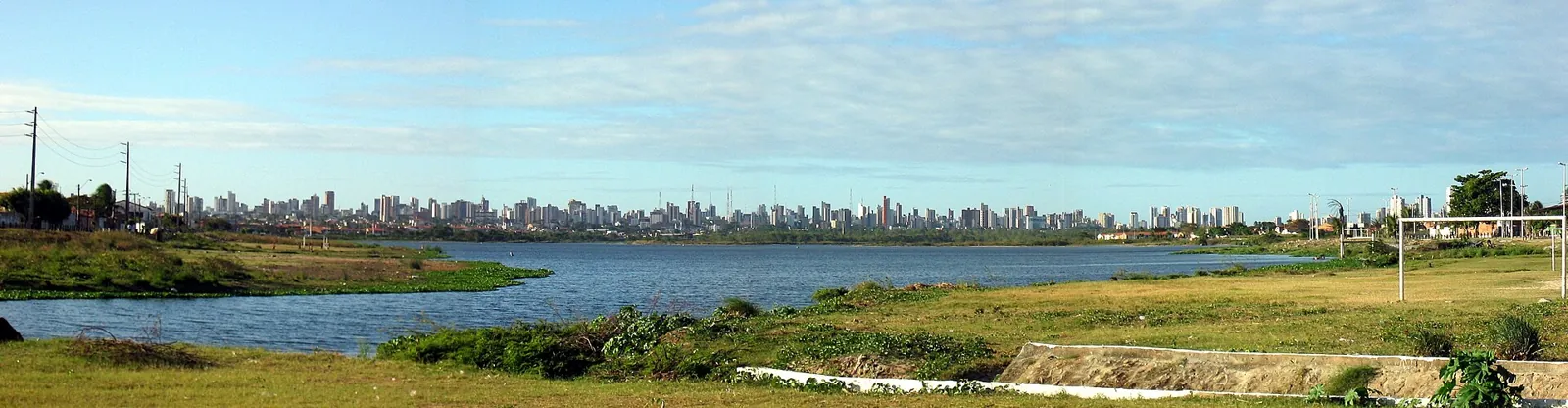
The Rio Cocó with the high-rises of the eastern districts on the far side.
Salt, drains, a moving shoreline and the reservoirs
Salt at Praia do Futuro
Salt is the local building disease, and the east coast has it worst. Researchers at UFC have measured chloride in the air here since at least 2013. A 2013 thesis ranked Praia de Iracema second among the places it compared, which included Praia do Futuro, and a 2016 dissertation found Praia do Futuro's readings far higher than Iracema's and rated that region Very Strong, Class IV, its top level. You will also read that this salt spray is among the world's strongest, repeated in the press and in a 2020 thesis with no measured ranking attached. O Povo reports that hotel and condominium projects of the 1980s stalled partly for this reason.
In July 2021, with two buildings in the neighborhood already closed, the civil defense began checking 26 older blocks there, and it reported only light problems in the first 14. Budget for this. Look for rust stains at balconies and exposed rebar, and ask for the condominium's facade and waterproofing history over ten years. Air-conditioner casings, window frames and elevators wear faster the closer you are to the sand.
Flooding and collapse risk
The official count keeps moving: 89 risk areas in 2012, 66 in 39 neighborhoods in 2024, with 48 of them prone to flooding, and 72 in February 2026. The civil defense coordinator expects more than 100 once the federal geological service finishes its new survey. These are mostly low-income settlements along streams, lagoons and the Maranguapinho and Ceará rivers. From 2012 to July 2025 the highest flood-related call counts came from Barroso, Jangurussu, Genibaú, Quintino Cunha and Passaré, far from the prime coast. Mucuripe is among the five neighborhoods with more than one kind of threat, and Vicente Pinzón has four landslide points, the most in the city.
Even so, streets flood across the city in heavy rain, and the infrastructure secretary has spoken of a "historic deficit" of drainage. April 2026 brought 499 mm of rain, 36% above the April average of 365.1 mm. Critics of the outorga program argue that drainage, roads and sewers have not kept up with the density it allows. Ask residents about garages below street level, and read the official layers with the help of the flood and landslide checks. Public layers are on the Observatório de Riscos Climáticos site run by the city.
The shore itself
A Uece geographer told O Povo in 2019 that erosion west of the city traces mainly to fixing the Mucuripe port from 1939, along with unplanned building and reduced sand transport. In 2019 the city added about 1 million cubic meters of sand between the Rui Barbosa and Desembargador Moreira groynes, moving the beach out by 40 to 80 meters. Monitoring afterward found a deeper drop into the sea, with trenches of up to 3 meters at some points, later easing slightly. East of the port, a geographer quoted in 2022 put sea-level rise at about 20 cm over 20 to 25 years and said coconut palms more than 20 years old had been eroded near the Cocó river mouth. That is one specialist's estimate. For a first-row building, ask how close the waves came in the last spring-tide storm.
Water supply
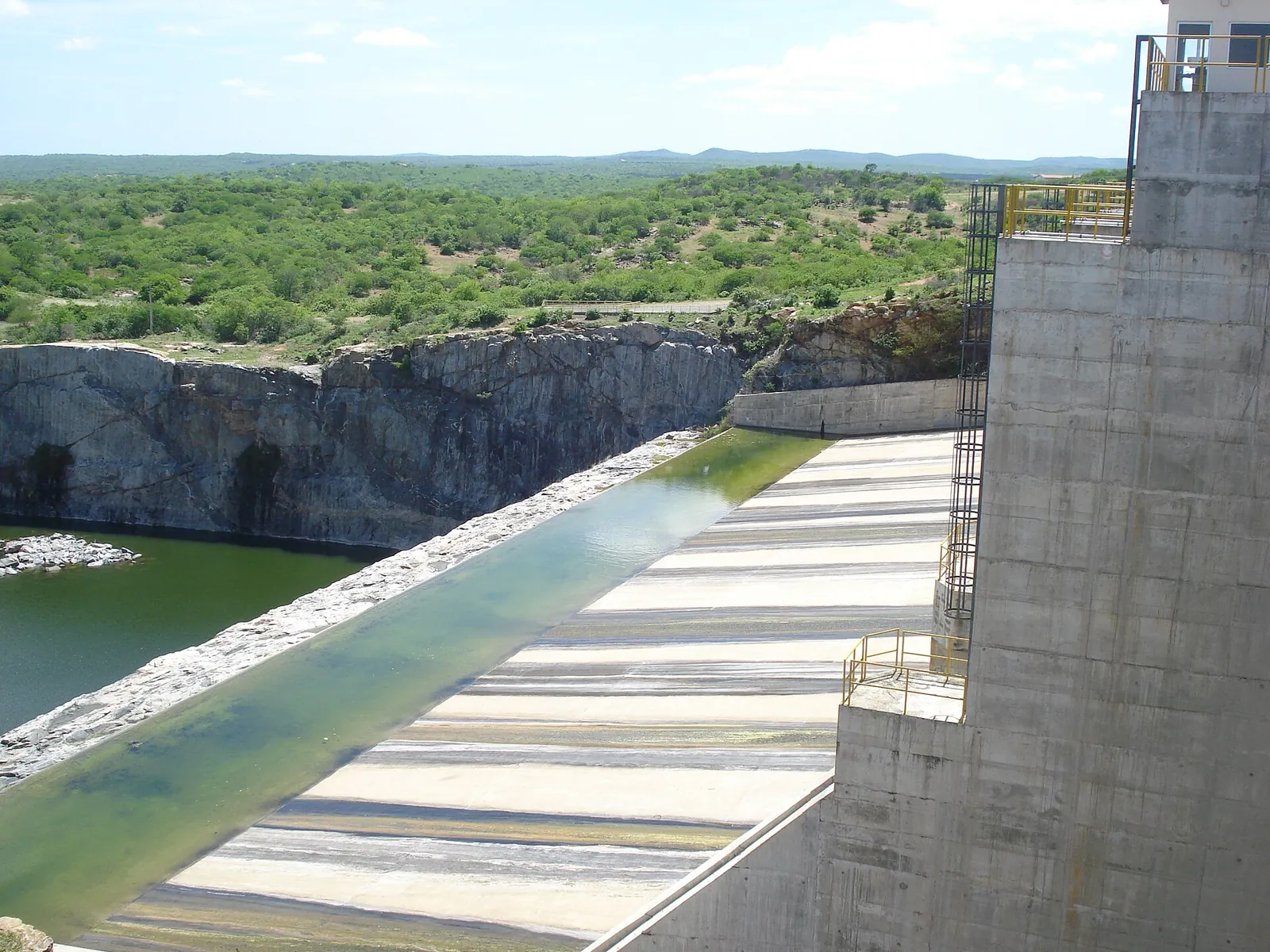
Drought is the risk most foreign buyers never think of. Fortaleza drinks from a chain of reservoirs, Pacajus, Pacoti, Riachão and Gavião, topped up when necessary by a 400-km transfer from the Castanhão and Orós in the interior. In February 2026 the metropolitan system was at about 48% and the Castanhão at 19.53%, which Cogerh, the state water agency, classes as critical. It warned that Pacoti could fall below the level at which water passes to the next reservoir, and restarted the transfer after years without one, at 6,000 liters per second. Rain then lifted the Castanhão above 32%. In July 2026 the basin committees approved 6,000 liters a second, noted that metropolitan reservoirs had ended the rainy season with 30% less water than a year earlier, and warned that flows would fall if El Niño reduces rain in 2027.
The answer under way is a seawater plant on the Praia do Futuro coast, sized at 1,000 liters a second, about 12% of the metropolitan system's demand, for some 720,000 people. Works were authorized in July 2026 after years of disputes, including with telecom firms whose submarine cables land nearby, and delivery is forecast for the second half of 2028. Its effect on bills is not settled. Ask a building whether it has its own well or a cistern and how much it holds.
Press a month
JFMAMJJASOND
Bars show rain. Fortaleza, INMET code 82397, 1991-2020. Source.
The spillway of the Castanhão reservoir, the interior source that topped up the capital in 2026.
The numbers moved sharply in 2026, and nobody should read them as settled. State figures recorded 742 violent deaths in Fortaleza in 2025, down 11% from 834 in 2024, a rate of 28.86 per 100,000 that made it the fourth highest among state capitals. Ceará itself had the highest state homicide rate in the country in 2024, according to a federal Justice Ministry report. From January through May 2026, killings in the city fell 62.9%, from 337 to 125, and in July there were 20 against 53 a year before, the best month in the state's series. These are CVLI counts, meaning homicides, robbery followed by death and fatal assault. The state security department also reported violent property crimes, robberies included, down 49% statewide in its May 2026 briefing, from 2,424 cases to 1,237.
The governor credits the security forces. Reporters have noted that the drop coincides with the Comando Vermelho faction absorbing rivals in late 2025. O Povo documented this shift in Maracanaú and Maranguape and found the fall in killings there coincided with it, without establishing cause. When asked, the security department passed the question to the police, who did not address it. A truce or takeover can end as quickly as it began, so look at the latest monthly bulletin and the police area, and not only the citywide trend.
Where it has been concentrated
In 2025 the conflict came close to the expensive coast. Police area AIS 1 covers Aldeota, Cais do Porto, Meireles, Mucuripe, Praia de Iracema, Varjota and Vicente Pinzón, and O Povo calls it historically the city's least violent. A war for Vicente Pinzón pushed it to 19 killings in the three months to 20 August. July's 12 made its worst month since 2017, ten of them in Vicente Pinzón and the others in Cais do Porto and Aldeota. Papicu, in AIS 10, saw 14 in the same period, and schools stopped classes during the conflict. Police intelligence also wrote that the Comando Vermelho had cleared rivals from every community of Praia do Futuro II and wanted control around Mucuripe port.
Forced expulsions are a distinctive local feature. A police report counted 143 cases in 49 Fortaleza neighborhoods from January 2024 to September 2025, led by Ancuri and José Walter with 16 each, then Vicente Pinzón with 15 and Papicu with 7. A buyer of a modest house or an investor in a small building at the edge of such a community is exposed to something a doorman cannot handle.
How residents read a street
As a general observation, residents here judge safety by the block more than by the neighborhood name. High-rises with guarded entrances and garages stand within a few streets of communities in dispute, particularly in Mucuripe, Papicu and Praia do Futuro. Walk the route you would use after dark, ask the doorman which streets people avoid, and look at where app drivers refuse to stop. For a comparison, buyers who weigh these numbers often look at Boa Viagem and Ponta Negra as well, whose states publish their own data, and which need the same block-level check.
Hospitals, schools, shops and foreign residents
Private healthcare sits in and around the prime districts. Hospital Monte Klinikum on Rua República do Líbano in Meireles, Hospital São Carlos on Avenida Pontes Vieira in Dionísio Torres, part of the Rede D'Or group, and Hospital Unimed on Avenida Visconde do Rio Branco are the main names for someone on a private plan, along with Hospital Aldeota and Hospital Antônio Prudente. Hospital Unimed made Newsweek's 2026 world ranking. The largest hospital in the state public network is the Hospital Geral de Fortaleza in Papicu, which handles neurosurgery, stroke and transplants. Plan prices and everyday budgets get their own page on living costs.
QuintoAndar lists Colégio Ari de Sá, Christus, Antares, Darwin, Santa Cecília and Batista Santos Dumont in and around Aldeota, and Chaves na Mão calls Colégio 7 de Setembro in Cocó one of the best known. International options look thin: no international school's own page could be opened for this guide, so ask any school you consider about its accreditation and fees. On Numbeo, contributors report about R$ 19,800 a year for international primary.
For groceries, Chaves na Mão lists Aldeota's Pão de Açúcar, Cometa and Guará. The local chain São Luiz bought a store on Avenida da Abolição at Rua Oswaldo Cruz in 2024 and that year announced a lower-priced Mercadão for Avenida Rui Barbosa, so see which stores are open now. Malls cluster inland: Del Paseo, Aldeota and Pátio Dom Luís in Aldeota, Center Um, the city's first, and Iguatemi Bosque and RioMar farther out. On the waterfront, the Mercado dos Peixes at Mucuripe sells seafood straight from the boxes, and the Feirinha da Beira Mar trades every evening.
Who the foreigners are
The foreign community is small and has no single district. The 2022 census found 5,983 foreign residents in all of Ceará. Federal Police records in early May 2022 showed 16,899 active registrations in the state, 9,547 of them in Fortaleza. Italians were the largest group in 2021 at 2,119, then Portuguese at 1,929. Many arrivals in the 2017 to 2022 census count came from Venezuela, the United States and Portugal, though these figures include returning Brazilians. As a general observation, English is not widely spoken outside hotels, and Meireles is where short-stay visitors and retirees are most visible. For staying long term, see residency options; the property route has its own investor visa guide.
Rain until May, wind from August
Temperature hardly changes here. INMET's 1991-2020 normals for Fortaleza show highs between 30.5 °C and 31.7 °C and lows between 22.8 °C and 24.9 °C in every month. Rain and wind are what separate the seasons. Of the 1,584 mm a year, 1,294 mm falls from January to May, with 385 mm in April alone, while August through November brings only about 53 mm in total.
What you can learn depends on when you come:
March to May is the time to look at drainage. Water stains on ceilings, blocked gutters, flooded garages and sagging sidewalks all show. It is also when short-let demand is weakest, with May the low point in Airbtics' data, so sellers and agents have time.
June and July are the transition. July is the short-let peak, and an apartment on the Beira Mar will show you its holiday noise and full occupancy.
August to November is dry and windy. It suits a walk through the kite towns, and it shows what the salt-laden wind does to facades. The season officially opens in Caucaia each 1 August, with gusts that usually reach 45 to 60 km/h according to Funceme, the state weather agency. On a high balcony that wind decides how much you will use the space, so go out on it.
December to February brings the European winter crowd and high-season flights. Rain can start early, but mostly you will see the city at its most expensive.
The wet season is also a water-supply test. An inspection in a low-rain year tells you whether a building trucks in water. Funceme publishes a rainy-season outlook early each year. In 2026 it gave 40% for below normal, 40% for normal and 20% for above, and then April came in far above average, a useful reminder that a forecast is only a probability.
Flights to Europe and a metro still underground
Fortaleza's reason to stand out from other Northeast capitals has been its link to Europe, and this has recovered. The airport, Aeroporto Internacional Pinto Martins, run by Fraport Brasil, handled about 6.1 million passengers in 2025. In April 2025 O Povo reported that 2026 would begin with about 65% of the weekly international frequencies of the 2018 peak: 30 against 46, and 8 destinations against 15. The European side has since grown past that. The press in 2025 and 2026 reported these routes:
International nonstop routes reported from Fortaleza, 2026
Destination
Airline
Reported frequency
Lisbon
TAP
9 a week from October 2026, 12 from January 2027; flown on a leased aircraft from May to September 2026
Lisbon
LATAM
3 a week until October 2026, 4 in October, 5 from November 2026 to March 2027
Paris
Air France
5 a week from July 2026, daily in December
Madrid
Iberia
Started January 2026 with 3 a week, 4 from March, daily from late October, 10 a week in December and January
Buenos Aires
Gol
4 a week reported for early 2026, with 19 round trips in January and 14 in February; current schedule not confirmed
Montevideo
Gol
Announced in July 2025 as weekly on Saturdays from late November 2025; current schedule not confirmed
Orlando
Gol
High season only, July, December and January, as reported in July 2025; current schedule not confirmed
LATAM's weekly flights to Miami and Santiago ended in October 2026, as it moved seats to Lisbon, so older lists are out of date. A March 2026 report also mentions an Air France route to Cayenne in French Guiana, with no schedule confirmed. The airport's own flight board could not be read for this guide, and airline schedules change often, so check before planning around a route. Cabo Verde Airlines, which served Ceará for about 20 years, is only under discussion. A March 2026 column in Diário do Nordeste listed a possible return, along with Rome and a German route through Discover Airlines from 2027, none confirmed. It also said Condor does not appear to be targeting Ceará, so a regular German link cannot be counted on for now.
Getting across town
A new VLT light-rail branch opened to the airport on 6 February 2026, a 2.4-km link from Expedicionários that takes about 5 minutes and was free during its trial phase. It connects to the Parangaba-Mucuripe line, which runs 13.2 km with stops toward the port, though riders change platforms. The airport itself is about 8 km by road from the Centro and 10 km from Meireles, the Melhores Destinos guide says.
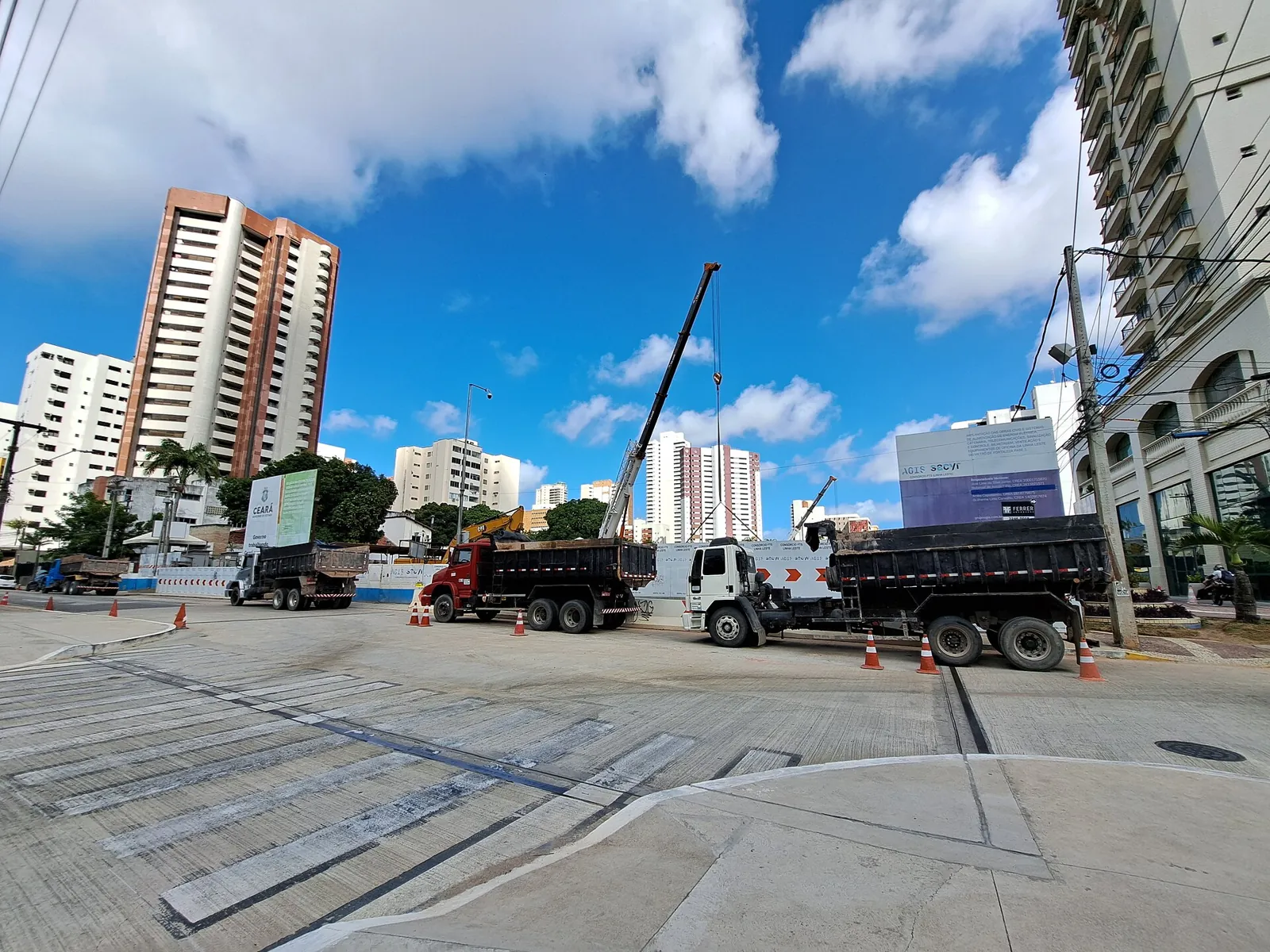
The big project is the metro's Linha Leste, a tunnel from the Centro to Papicu through Aldeota. The first phase reached 50% in September 2026. Sections could open from about the end of 2027 if a study confirms it, otherwise near the end of 2028. Avenida Santos Dumont reopened near the Colégio Militar in September 2026 after about 12 years of work sites. Its stops at Colégio Militar and Nunes Valente matter most for Aldeota, while the second phase beyond Papicu is officially not a priority.
As a general observation, most prime-district residents drive or use app cars. Bike lanes along Santos Dumont and the Beira Mar are useful, and the bus fare is about R$ 5.40 by Numbeo's reading. For foreign licenses, see the driving guide.
Work on the Nunes Valente station of the Linha Leste, among the high-rises of Aldeota.
The master plan applies from about May 2027, and a May 2026 report expected the new land-use law it depends on in the second half of 2026. No later status was found, so check at the Câmara.
IPTU values may be recalculated under the new formula from 2027, with a review at least every four years.
The Linha Leste should begin opening between late 2027 and 2028, if the phasing study confirms it. Buyers should discount promises about station dates, since the airport's VLT branch came in three years late.
Works on the seawater desalination plant were due to begin about 60 days after the July 2026 authorization, with water forecast for the second half of 2028.
A 16-year concession signed in August 2023 gives two Beira Mar groynes to a consortium that includes Beach Park, with free public access, restaurants and an investment reported at R$ 23 million to R$ 29.5 million. In January 2026 the Rui Barbosa pier held a provisional permit and lacked air force clearance. Look for yourself at the Rui Barbosa and Náutico groynes before paying for proximity to them.
The Praia do Futuro beach clubs face either a negotiated reduction or a court-ordered clearance, and the SPU has spoken of an international design competition.
Submarine cable landings and data centers keep drawing companies to Praia do Futuro.
The national tax reform reaches rental income from 2027. The guide to non-resident rental tax sets out the known parts, and some remain open.
As a general observation, the city's coastal market still leans on tourism and the flight map. The last price correction lasted three years and ended in 2019.
Selling later
No published figure for the average time to sell in Fortaleza was found. A rough proxy: A Corrida dos Bairros shows how many of last month's listings were still online a month later. In November 2026 that was 84% for Praia do Futuro I, 83% on its general Praia do Futuro page, 81% in Meireles, 76% in Aldeota, 64% in Mucuripe, and 56% in both Cocó and Praia do Futuro II. A listing can vanish without selling, and portals are messy. As a general observation, modern mid-size units in Cocó seem to turn over faster than large older units in Meireles.
Competition is the issue when you sell. More than half of the Meireles apartment listings are above 150 m², so a seller of a big older apartment is one of hundreds. Unsold new units across the metropolitan area rose 30% in a year to 15,548 by August 2026, though Brain counted only 492 above R$ 3 million in September. So buyers at the top have few new choices, and sellers of compact units compete directly with developers offering payment plans.
The buyers, as a general observation, are mostly Brazilians, with local families in Aldeota and Cocó and more outsiders on the waterfront. No published split was found. A foreign seller's paperwork starts on the day of purchase, as selling as a foreigner and sending money to Brazil explain. Heirs have separate steps, covered under inheritance and property.
A low lot between your building and the water may carry a permit for 100 meters above the zoning limit, paid for through outorga onerosa. Ask Seuma what is licensed on each neighboring lot and read the planning council's records. Treat a "permanent view" in an ad as a sales phrase.
Using a national ITBI calculator
National sites such as Boa Conta show a flat 3%. Sefin's page sets 4%, with 2% if paid by the day before the deed, so a slow closing can add R$ 20,000 per million reais of value. Write the payment date into the purchase contract and get the notary's reading of the current text.
Missing the federal record on the first rows
Sellers of apartments near the water do not always mention a RIP. The annual fee and the transfer charge land on someone, and registration needs the federal clearance. Ask for the RIP number, or written confirmation that there is none, before you pay a deposit, then read the matrícula for foreiro or ocupação.
Buying into a building that has skipped its inspection
Law 9.913 of 2012 makes inspection mandatory from three floors up, and in 2021 the city notified 874 older buildings that lacked the certificate. The forensic report on the Edifício Andrea cited inadequate maintenance over its life. Ask for the current certificate and the engineer's report, then look in the minutes for facade, pillar and waterproofing work.
Pricing in the Praia do Futuro beach clubs
The sand strip is in a 20-year federal lawsuit, with an SPU proposal to cut clubs to 800 m² and a standing court order behind it. A rental pitch built around those clubs may date quickly. Have a lawyer report on the case, and judge the apartment as if the clubs were gone.
Reading the IPTU on an old bill
Aerial images and reclassified building standards pushed some bills up by more than 40% in 2026, and a new valuation formula may apply from 2027. A seller's old bill may understate the real cost. Get the 2026 bill and check the registered area and standard against the actual unit.
Assuming a studio's nightly rate will hold
Airbnb listings in the city rose 55.5% in a year while occupancy slipped to 63%, and studios are a staple of current launches. Before paying a developer's projection, pull a year of calendars for existing units in the same building type, and get the convention's short-let rule in writing.
Buying a cheap house near a community in dispute
Police counted 143 forced expulsions in 49 Fortaleza neighborhoods from 2024 to 2025. Small houses in Vicente Pinzón, Papicu and the back lanes near the port look like bargains beside the high-rises. Visit at night with a local, and check whether the seller holds title or only possession.
By Sefin's page, 4%, or 2% if you settle by the eve of the deed signing; the published code shows 3% for the full rate, so ask Sefin. Mortgage money under the regulated system pays 0.5% up to R$ 390,672.24 in 2026. Closing costs by city are on a national page.
How much does an apartment cost in Fortaleza?
About R$ 966,000 for 100 m², going by FipeZAP's R$ 9,660 average for September 2026. Used apartments in Meireles asked about R$ 12,250 to R$ 13,000 in 2026 readings, and new units on Beira Mar averaged above R$ 23,000.
Is Fortaleza's rental yield good?
It is low: 4.92% gross on FipeZAP's long-let measure, level with Curitiba at the bottom of the capitals here, even after a 16.59% rise in advertised rents. Fees, IPTU, vacancy and tax all come off that figure.
Can I run an Airbnb in a Fortaleza apartment?
No municipal law on short-term rentals was found, so the building's convention is the main control. Read it and recent minutes, then move on to the national rental rules.
Are there direct flights from Europe to Fortaleza?
Yes. Press reports in 2026 list TAP and LATAM to Lisbon, Air France to Paris and Iberia to Madrid, with frequencies rising in the European winter. Germany has no regular route at present, so check airline schedules before planning around one.
How safe is Fortaleza now?
State data show 742 violent deaths for 2025, or 28.86 per 100,000, then 125 killings from January through May 2026, down from 337. The cause is disputed, and neighborhoods near Vicente Pinzón had serious conflict as recently as 2025, so check at block level.
Is the land on Beira Mar federal land?
Researchers using the city's map file say the 1831 marine strip and its additions lie under the high-rises at Iracema and Beira Mar. Whether your unit pays depends on its own record, so request the RIP number and see the guide to marine land.
Does Fortaleza run out of water?
Supply is managed, and reservoirs have needed support: in 2026 water was again brought from the Castanhão and Orós in the interior. A seawater plant on the eastern beach was cleared to start works in July 2026. Ask a building about its well and cistern.
When will the new master plan apply?
It was approved in November 2025, and its start was postponed to about May 2027, because a new land-use law was still pending. The 2009 plan stays in force meanwhile.
Which is the best month to inspect a Fortaleza apartment?
April shows drainage and leaks, since it averages 385 mm of rain. September or October shows the wind and salt on a dry day, when you can test the balcony. With a single trip to spend, choose the wet months.
We use cookies, including Google Analytics, to understand how visitors use this site. You can accept or decline non-essential cookies. See our Privacy Policy.