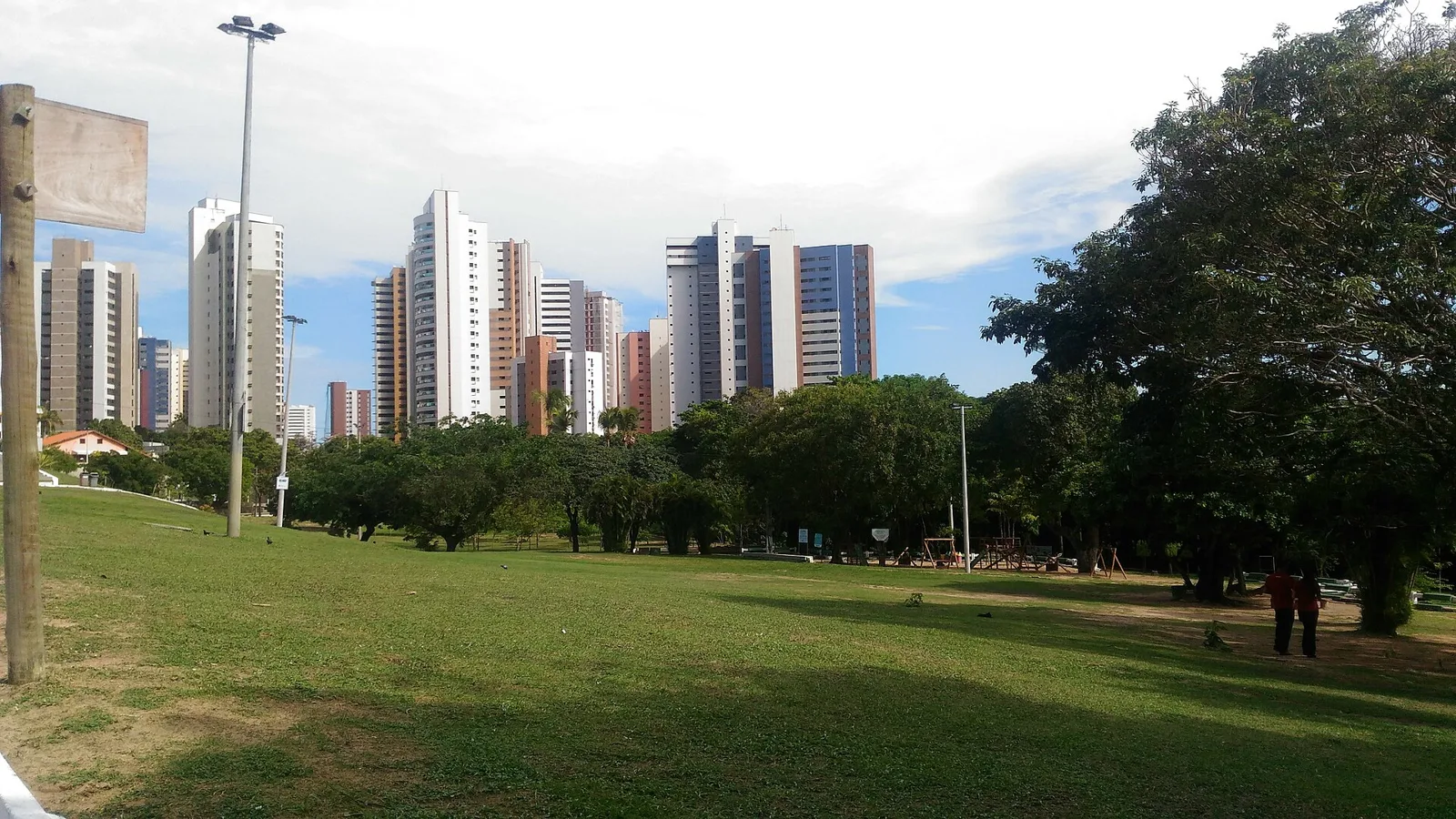
Living beside the state park
The Parque Estadual do Cocó defines this neighborhood, and it is a working mangrove reserve as well as a view. A state decree created it in June 2017 with about 1,500 hectares, a figure later given as 1,575. It drew 598,748 visitors in 2023, more than any other state park in the country, according to the Instituto Semeia. Trails start from Avenida Padre Antônio Tomás, and Avenida Sebastião de Abreu also gives access to the boat trips.
Expect the park to behave like the river it follows. From 30 April to 3 May 2025 the trails closed for high water, which a park educator put down to high tide and heavy rain. A fire closed trails for nearly a month in 2024. Fencing has a story too: after a tree fell in a storm in 2022, residents worried about the gap in the fence and robberies. So a park-facing apartment gets green views and birdsong, plus occasional smoke, mosquitoes and a dark edge at night. Ask neighbors how they feel about the walk home.
The bigger issue is the boundary itself. O Povo reported in January 2020 that about 1,400 properties lay inside the park, based on a state survey, and that only about 200 should remain, either state facilities or homes of the Casa da Farinha and Boca da Barra communities. It did not say what would happen to the other 1,200 or so. Anything sold as a bargain house or plot near the river needs a check of the polygon, and of any notice of expropriation in the registry. A 1993 decree declared part of this land of social interest for expropriation, so have counsel go through the record with the help of the title check guide.
A district built for driving
This is a car neighborhood. Cocó lies about 5.6 km from the Centro and about 4 km from Praia do Futuro, with RioMar Fortaleza to the north, Iguatemi Bosque to the south, and the Hospital Geral de Fortaleza and Hospital São Mateus nearby. As a general observation, a typical block offers a parking garage and a wall, not a row of shops. Its density of 7,051 people per square kilometer is less than half that of Meireles, and that shows in the walk to anything.
The road system is the subject of constant repairs. A tunnel on Avenida Engenheiro Santana Júnior at Padre Antônio Tomás opened in 2016 as the last stage of works linking the Papicu and Antônio Bezerra bus terminals. In June 2025 the city's traffic agency, AMC, added a lane on Santana Júnior after the Antônio Sales viaduct, and its traffic director called the stretch toward Iguatemi a critical point at rush hour. Continue south and Avenida Washington Soares is another known bottleneck. Before you buy, drive the school or work route early in the morning and again at 6 p.m., and note the time.
The Linha Leste metro will end its first phase at Papicu, close to the northern edge. The state calls phase two toward Edson Queiroz no priority, so treat the rail link as useful only for those blocks close to Papicu. A foreign owner who plans to drive should see the driving guide early.
Prices and how quickly listings move
A Corrida dos Bairros counted 298 apartment listings this November, at a median of R$ 9,939 per square meter and the middle half running from R$ 5,764 to R$ 12,697. The usual sale was 122 m² at R$ 990,000, with half of them priced between R$ 600,000 and R$ 1,795,000. Sinduscon's figure for new units rose from R$ 13,171 in the second quarter to R$ 13,449 in August, and Movimento Econômico's report on the third quarter named Cocó and Guararapes as rising faster than Meireles and Beira Mar.
Unlike the two coastal districts, price per square meter is fairly flat across sizes: R$ 11,333 for up to 50 m² and about R$ 10,000 from 70 to 100 m², with only mid-sized units of 100 to 150 m² dropping to R$ 8,291. As a general observation, family-sized apartments hold value here because families are the main buyers. Listing turnover is the fastest of the five districts here, with just 56% of October's ads still up in November and active stock down 20.9%. Yet one month is noise, so ask a broker for sale prices in the same building. Neighboring Cidade 2000 and Varjota make useful comparisons, and A Corrida places Guararapes and Engenheiro Luciano Cavalcante in the same price group, each with its own traffic and school map.
Other property types are thin but worth a glance. Houses ask R$ 4,354 per square meter on 22 listings and land R$ 1,484 on just 6, a reminder that older low-rise plots still exist here. Commercial suites ask R$ 15,084 on 10 listings, well above Aldeota, and 32 are for rent at R$ 70 a month per square meter, because the malls and clinics create demand for offices nearby.
FipeZAP does not report a separate Cocó figure in the press lists found. Rents are lower than at the coast. A Corrida's median is R$ 41.40 per square meter, unchanged for three months, and the typical advertised unit is 96 m² at R$ 3,500, for a gross long-let calculation of 5.00%. In DataZAP's 2024 rankings, Cocó came third for sale clicks with 4.49% but seventh for rental searches with 2.68%. People want to buy here more than they want to rent here, a pattern worth remembering if income is your main goal.
Who lives here and where the children go
The census counted 23,005 residents in 3.26 km², with 93% in apartments and households averaging 2.7 people, against 2.4 in Meireles. Some 16% are 14 or under and 21% are 60 or older, a younger profile than Aldeota or Meireles. The neighborhood's development index was 0.762 in the 2010 data, well below Meireles at 0.953.
Colégio 7 de Setembro is among the best-known schools in the district, and directories also list Espaço Aberto, Vila Criança and Integral. Escola Toca da Criança started at about R$ 1,668 a month in one directory, a useful marker for private early-years prices. Unichristus and Uninta are listed for the area, and Unifor sits farther south. For a family on a long posting, this is the most straightforward base in the city, as long as both parents accept a driving life.
What you give up is the sea. Salt air, as a general observation, is a smaller problem than on the coast. UFC research found chloride in the air falling as distance from the sea grows, and that matters for building maintenance. As a further general observation, a river valley brings mosquitoes and still, warm evenings, so your apartment's orientation decides how much air-conditioning you run.
Rain, the river and the neighbors
No official list naming flooded blocks in the Cocó neighborhood itself was found. The Defesa Civil's risk areas emphasize settlements along streams and lagoons, and flooding has hit nearby Aerolândia, where Diário do Nordeste reported at least 66 homes affected at Vila Gomes in 2026. So look at the elevation of a garage ramp, ask the building manager about the storm of April 2026 when 499 mm of rain fell in the month, and open the map layers at the Observatório de Riscos Climáticos. The civil defense links the city's flooding partly to the Cocó and Maranguapinho rivers. The flood guide shows how.
The security picture depends on who your neighbors are. To the north lie Papicu and Manoel Dias Branco, in the same police area as the 2025 faction conflict, which the press reported reached communities such as Índios and Verdes Mares in Papicu. Those are specific places, and much of Cocó's stock stands behind walls and gates. Walk it at night anyway.
When should you choose Cocó over its neighbors? Pick it over Aldeota if you want a newer building with a leisure floor and more green, and do not mind driving for errands. Pick Meireles instead if walking to the sea and to the doctor matters more. Buyers in other cities will see a parallel in Ecoville in Curitiba, another modern car district beside green space, and in Moema in São Paulo beside its park. Return to the main Fortaleza guide for tax, title and flight details.
Questions about Cocó
Is Cocó near the beach?
No. Praia do Futuro is about 4 km away and the Beira Mar is a drive too. You trade the sea for the state park, and for less salt damage to the building.
How much is an apartment in Cocó?
A typical listing in November 2026 was 122 m² at R$ 990,000, with the median at R$ 9,939 per square meter. New units averaged about R$ 13,400 in Sinduscon's August survey.
Do properties inside the Cocó park have title problems?
They can. A 2020 press report said about 1,400 properties lay inside the park, and only about 200 were expected to stay. Check the park's polygon and the registry record before paying for anything near the river.
Can you live in Cocó without a car?
Not easily. Malls and hospitals are not walking-distance errands from most blocks, and the metro's first phase stops at Papicu. Expect to drive or use app cars.
Does Cocó flood?
No official list of flooded streets in Cocó itself was found. Flooding hit nearby Aerolândia in 2026, and the park trails close during high water, so inspect garages and ask residents about April 2026.
Sources
- A Corrida dos Bairros, Cocó, November 2026
- O Povo, Parque do Cocó timeline
- O Povo, park management plan and properties inside, January 2020
- O Povo, most visited state park, May 2025
- O Povo, trail reopening after high tide, May 2025
- Diário do Nordeste, trails reopen after the fire
- O Povo, tree fall and resident fears, February 2022
- Diário do Nordeste, traffic changes in Cocó, June 2025
- O Povo, Santana Júnior tunnel, 2016
- QuintoAndar, neighborhoods of Fortaleza with HDI figures
- Melhor Escola, schools in Cocó
- Movimento Econômico, third quarter 2026 sales and launches
- O Povo, most searched neighborhoods, July 2024
- O Povo, police report on faction territory, September 2025
- Diário do Nordeste, civil defense calls and April 2026 rain, May 2026
- UFC, Campos 2016, air aggressiveness in Fortaleza
- Diário do Nordeste, Washington Soares congestion
- Diário do Nordeste, phase two of the metro, May 2025
- Chaves na Mão, best neighborhoods in Fortaleza, 2022
- Diário do Nordeste, neighborhoods most affected by incidents, November 2025
- Diário do Nordeste, Linha Leste timetable, September 2026
- Diário do Nordeste, the Vicente Pinzón and Papicu conflict
Written by Lucas Andrade. Updated November 2026. General information, not legal, tax or investment advice.