Brazil's best-known coast, where an average of R$ 11,302/m² hides a fourfold spread and buyers check heritage limits, land charges and armed-group maps block by block.
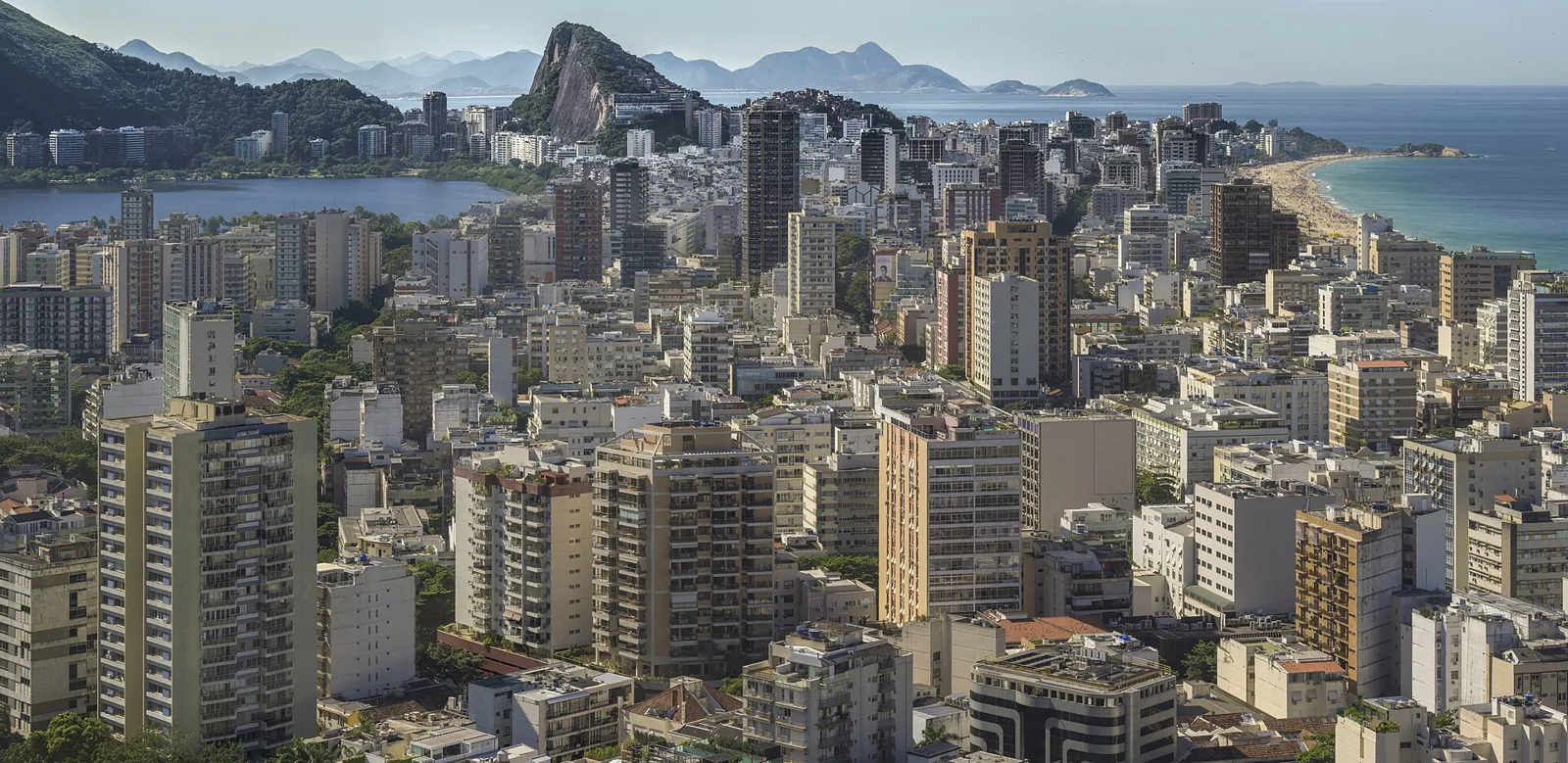
Rio's second-priced neighborhood after Leblon, a flat grid between ocean and lagoon where a July 2026 decree rewrote the building rules for the first blocks.
FipeZAP had Ipanema at R$ 26,996/m² in September 2026, up 10.3% in twelve months, and Secovi Rio at R$ 24,271/m² in December 2025, more than double the city's FipeZAP average.
Avenida Vieira Souto: Front-row seafront, with new 20-meter limits on named stretches and the listed promenade outside.
Rua Prudente de Morais: Quieter parallel to the beach, home to several newly listed buildings such as the Marajoara.
Rua Visconde de Pirajá: Commercial spine with shops, banks and buses; convenient, noisy and partly inside the height limit.
Rua Garcia d'Ávila: Tree-lined cross street, with a 20-meter limit near the beach.
Rua Farme de Amoedo: Near General Osório station, with bars and restaurants.
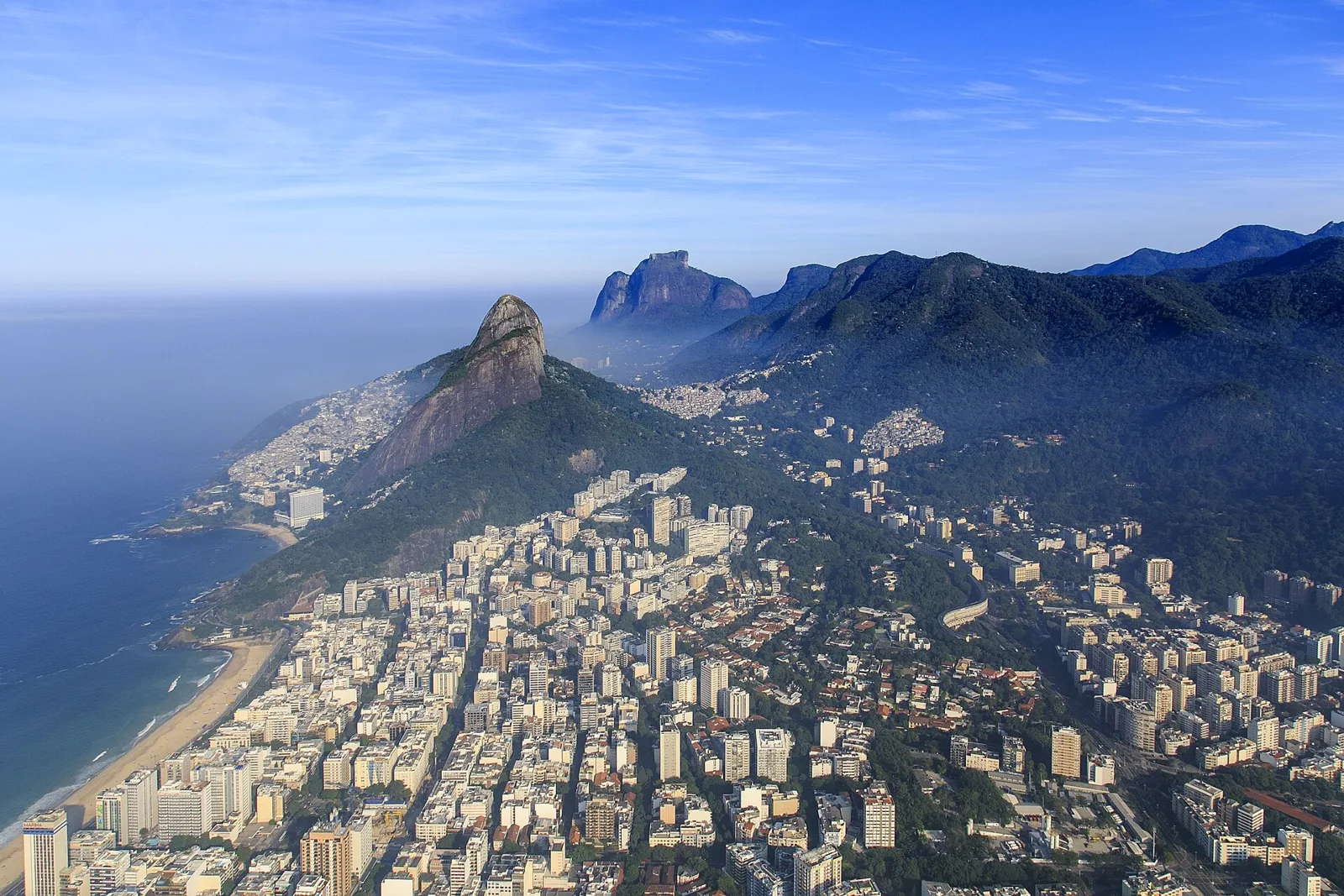
Brazil's most expensive neighborhood per square meter, with almost no land to build on, three layers of height law and a mountain road at its western end.
FipeZAP's September 2026 figure of R$ 28,837/m², up 13.2% in twelve months, is the highest in its Brazil-wide neighborhood list; Secovi Rio had R$ 24,939/m² in December 2025.
Avenida Delfim Moreira: The seafront, reported near R$ 55,000/m² in 2025, with a new 20-meter limit on named stretches.
Avenida Ataulfo de Paiva: Shops and restaurants below older apartment buildings make this the main commercial street.
Rua Dias Ferreira: Leblon's biggest dining street, and it gets crowded.
Rua General Urquiza: Tree-lined and calmer, with a listed stairway at its end.
A dense strip of old apartment blocks with Rio's largest short-stay supply, three metro stops and a real discount for anyone willing to buy a big, old floor plan.
FipeZAP had Copacabana at R$ 13,811/m² in September 2026, up 9.9% in twelve months, about half Ipanema's figure; listings over 150 m² asked R$ 10,500/m² and studios R$ 17,600/m².
Avenida Atlântica: Seafront and most valued address, closed for New Year and for major concerts.
Avenida Nossa Senhora de Copacabana: Commercial axis, with buses and shops; big old apartments above.
Rua Barata Ribeiro: Calmer parallel, popular with older residents and families.
Rua Cinco de Julho: Quiet inner street, also close to the metro corridor.
Rua Santa Clara: Edge of Bairro Peixoto, where a 2026 height amendment was vetoed.
Rio's planned coast of gated condominiums, malls and most of the city's launches, priced above Copacabana on FipeZAP and built around lagoons that are only now being dredged.
FipeZAP's reading for September 2026 was R$ 14,561/m², up 4.9% in a year, and Secovi separates Barra da Tijuca at R$ 14,379/m² from inland Barra Olímpica at R$ 9,249/m².
Avenida Lúcio Costa: Seafront avenue with front-row condominiums and salt exposure.
Avenida das Américas: Runs the whole length of the district, with malls and gated condominiums; heavy peak traffic.
Avenida Armando Lombardi: Jardim Oceânico's main road, home to the metro and BRT terminal.
Avenida Olegário Maciel: Shops and restaurants near Praia do Pepê, with higher prices.
Rua Colbert Coelho: Escola Americana's Barra campus.
A bay-side district of old apartments, hospitals, schools and two metro lines, priced above the city average, with a long legal fight over private land charges on its main streets.
FipeZAP's September 2026 reading of R$ 13,555/m² puts Botafogo about 20% above the city average, not below it as older guides said, and rents near Copacabana's.
Rua São Clemente: Busy main road; part of its length falls in the private laudêmio dispute.
Rua Voluntários da Pátria: Second main road, with shops and clinics; also in the dispute.
Rua Dona Mariana: Calmer residential street, popular with families; also in the dispute.
Rua Real Grandeza: Runs toward Copacabana, with the British School's primary site.
Praia de Botafogo: Bay front with Sugarloaf views, closed on big event nights.
A protected hill of old houses above Centro, priced at about the city's median asking level, where the tram, the water supply and the walk home decide more than the view.
Santa Teresa is missing from FipeZAP and Secovi tables; November 2026 asking data shows apartments at R$ 6,587/m² and houses at R$ 5,608/m², around the citywide median for that source.
Rua Almirante Alexandrino: The main ridge road and tram route, with houses, hotels and restaurants.
Rua Joaquim Murtinho: Lower road toward Lapa, with old houses; a route residents have flagged for robberies in the past.
Rua Paschoal Carlos Magno: Commercial stretch off Largo do Guimarães, with bars and the cinema.
Rua Monte Alegre: Residential corridor linking lower and upper parts of the hill.
Rua Paula Matos: Western pocket by Largo das Neves, toward Catumbi.
long-term landlords, with FipeZAP rents up 14.8% in twelve months and a 6.3% gross yield
owner-occupiers who want metro, beach and hospitals without a car in the South Zone
buyers who will have a local lawyer read title for federal, city and private land charges
first buyers of new units in the Porto or Reviver Centro zones, where ITBI exemptions apply
Look elsewhere for
anyone counting on short-let income before reading the building's convention and the pending council bill
buyers who will not check an address against the armed-groups map, especially in the West Zone
anyone planning to add floors or legalize an addition, while the court order on Lei Complementar 281 stands
people who want quiet nights around New Year and Carnival on the Atlantic front
The market in late 2026
FipeZAP put Rio at R$ 11,302/m² for September 2026, a rise of 5.57% over twelve months and 4.34% so far this year. That sits below the R$ 12,206 of São Paulo and the R$ 13,607 of Florianópolis, so the old line that Rio as a whole carries a premium over São Paulo no longer holds. The premium is local: a few beachfront neighborhoods price above anything else in the country, and most of the city does not.
Rent has moved faster than price. Over twelve months FipeZAP's rent index climbed 14.8% to R$ 61.86/m² a month, which leaves FipeZAP's gross long-term yield at 6.3%. A Secovi Rio executive said in March 2026 that sale prices had risen 16% over five years against about 76% for rents. Owners of existing apartments have seen income rise well ahead of value, and tenants in the South Zone have seen the opposite.
New construction tells its own story. The Brain survey for Ademi-RJ, the developers' association, counted R$ 14.2 billion of new-home sales in 2025, up 7.4%, on 11.1% fewer units. Launches reached R$ 16.5 billion, up 27.8%, and the report gives a general average price of R$ 12,927/m², up 14.5% in twelve months. Unsold stock stood at 14,404 units, which the report puts at under seven months of demand. Two products sit behind those totals: Minha Casa Minha Vida, the national affordable-housing program, was 39.6% of units sold in the last quarter of 2025, and studios under 45 m² rose to 27.8% of sales in the first quarter of 2025 from 18.1% a year before.
Geography has shifted as well. A 2025 report ranked the Porto region first for new-home sales, followed by Barra, Centro, Ipanema and Botafogo. Barra da Tijuca took 42.7% of the city's launches from January to June 2026 on Secovi Rio's count, 4,947 units with 3,134 sold.
On who is buying, the same 2025 report said 30% of South Zone buyers live outside Rio and 60% of local buyers purchase to invest. One brokerage, Patrimóvel, said foreigners took 32% of its 54 compact sales in Copacabana, Ipanema and Leblon between November 2025 and April 2026, with Argentines in the lead. That is one firm and a small sample, and no registry or tax series on foreign purchases could be found. A brokerage head also describes foreign investors and funds buying older Copacabana apartments, renovating them and letting them for short and medium stays. Buyers planning to borrow should read the financing guide first: the March 2026 report was written with the benchmark rate at 15%.
FipeZAP sale index, September 2026 report. 2026 is the 12 months to September. Inflation is not removed.
Rio's zones, tunnels and metro lines
Rio is long and thin, with granite between its parts, so the first question about any address is which tunnel or metro line it depends on. As a general observation, the zones below behave almost like separate markets, with different tenants, building types and risks.
The South Zone is two strips. Botafogo and Flamengo face Guanabara Bay. Copacabana, Ipanema and Leblon face the Atlantic, with Lagoa and Jardim Botânico behind them around the lagoon. Metro Line 1 runs through Botafogo and Copacabana to General Osório, and Line 4 continues through Nossa Senhora da Paz, Jardim de Alah and Antero de Quental. Gávea has no open station yet.
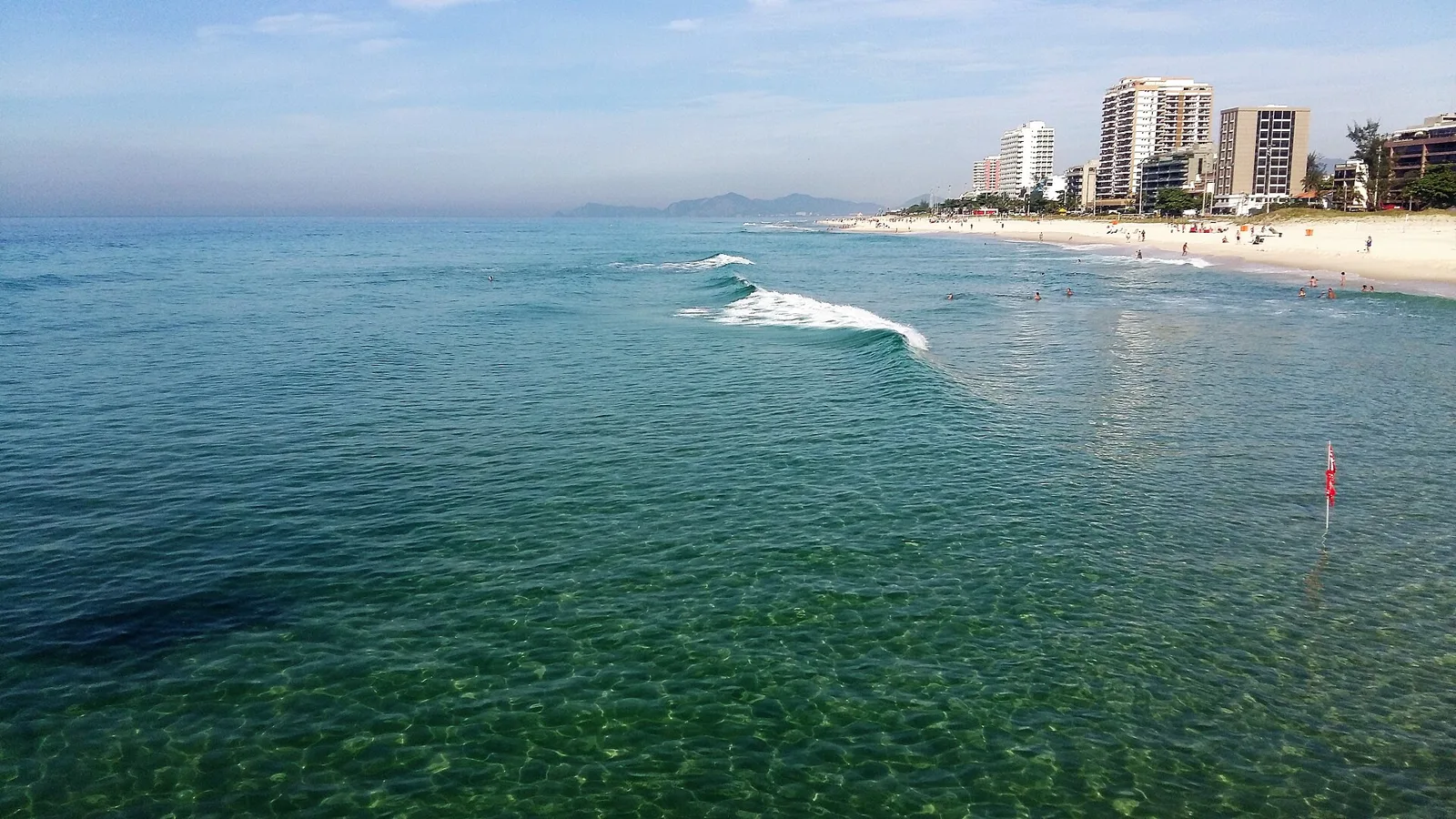
Line 4 then runs through São Conrado to Jardim Oceânico, the eastern tip of Barra da Tijuca. Barra and Recreio are the planned coast west of the hills, built around avenues, malls and gated condominiums. Secovi separates Barra da Tijuca from Barra Olímpica, the inland area around the old Olympic park, and the two differ sharply: R$ 14,379 against R$ 9,249/m² in December 2025.
Centro and the Porto are offices, government, heritage streets and the city's main experiment in converting commercial buildings to homes. Santa Teresa sits on the hill directly above Lapa and shares none of the beach-zone price logic. The North Zone starts at Tijuca, where FipeZAP's R$ 7,011 is about a quarter of Leblon's figure.
The wider West Zone is the part most foreign buyers never see, yet it is where most of the city lives. The armed-groups map, in its December 2025 update, gives it 65% of the inhabited urban surface and 2,964,400 residents, 49% of the city. Beyond the city limits, buyers who want a second home compare Búzios on the Lakes coast, Paraty on the Green Coast and Petrópolis in the mountains, each with its own land-law problem.
A practical test before any offer: time the door-to-door trip at 8 a.m. and 6 p.m. on a weekday to wherever you will go most. Maps and listing ads quote the empty-road number.
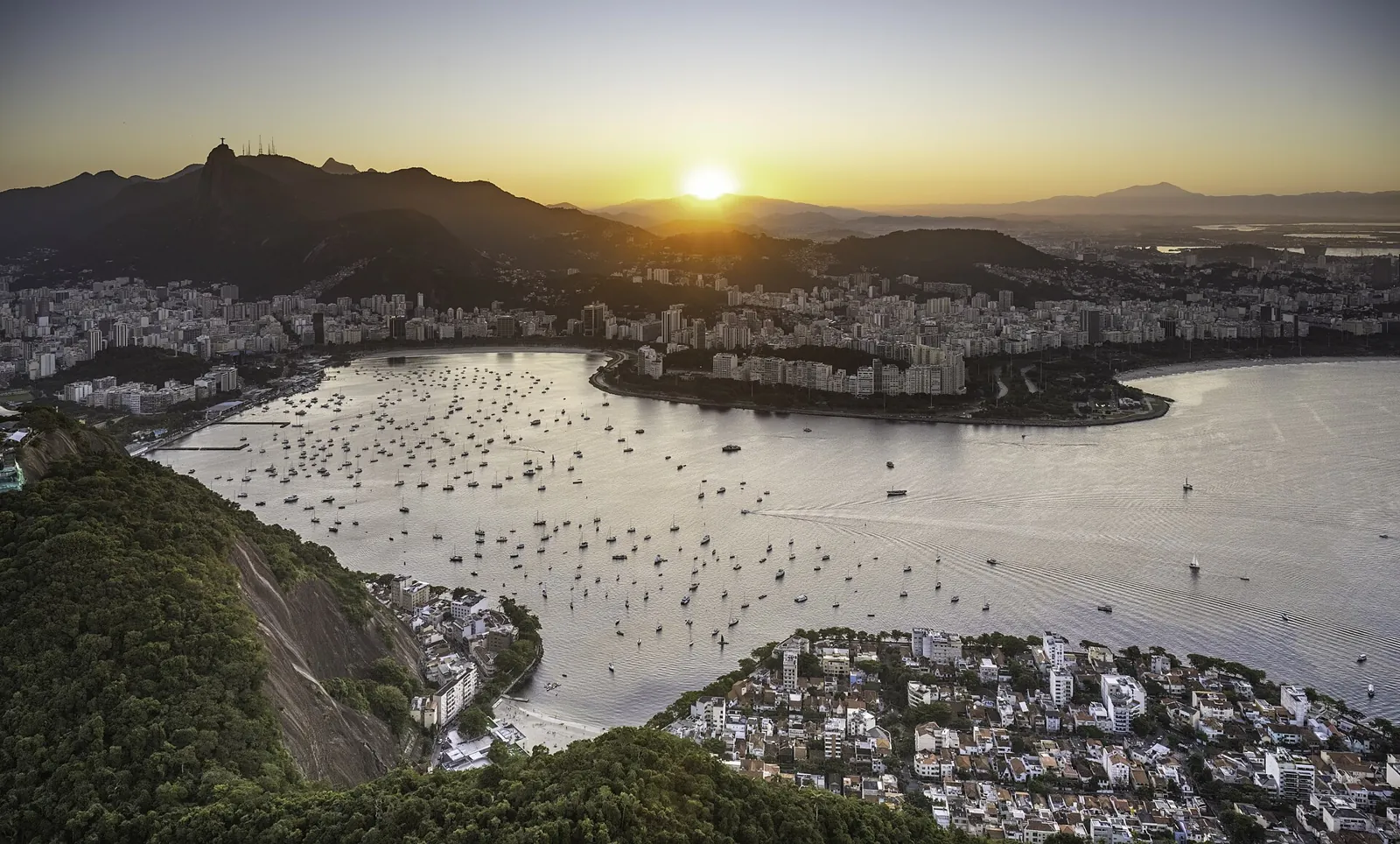
From Sugarloaf the South Zone shows as a strip of buildings pinned between the bay and the Tijuca massif.
The South Zone stock is old. A UNIRIO study dates reinforced concrete to the early 20th century and describes the early Copacabana apartment blocks as four to eight floors with interiors of 200 m² to over 600 m². Those grand layouts are why the typical apartment on sale in Copacabana in November 2026 is still 147 m² in asking data, and why the price per square meter falls as size rises. In Copacabana, listings under 50 m² asked R$ 17,600/m², against R$ 10,500 for those over 150 m². The same pattern shows in Botafogo, at R$ 15,175 against R$ 12,147. Anyone paying a headline price per square meter for a large old apartment should compare it with the large-unit band and not the neighborhood median.
Barra breaks the pattern. Its typical listing is 165 m², and the 100 m² to 150 m² band asks more per square meter, R$ 14,012, than units under 50 m² at R$ 12,388. New studio supply is concentrated elsewhere: a 2025 report ranked the Porto region first for new-home sales and said the 153 studios of one Praça Mauá retrofit sold in two hours. In Leblon, scarcity has pushed some launches far beyond the resale market; Brazil Journal reported units around R$ 100,000/m² in 2024, when the FipeZAP neighborhood average was R$ 23,650.
Condominium fee, Secovi Rio, December 2025
Neighborhood
R$ per m² a month
12-month change
On 100 m²
Leblon
18.89
6.7%
R$ 1,889
Ipanema
18.74
5.2%
R$ 1,874
Barra da Tijuca
18.13
6.0%
R$ 1,813
Centro
15.35
12.3%
R$ 1,535
Botafogo
14.19
5.3%
R$ 1,419
Copacabana
14.03
6.0%
R$ 1,403
Tijuca
11.93
7.1%
R$ 1,193
Recreio
11.60
4.2%
R$ 1,160
These are averages, and an individual building can be far from them. Read the accounts using the condominium fee guide, and watch the minutes for special assessments.
Rio has one document most cities lack. Lei Complementar 126/2013 and Decree 37.426/2013 require a licensed engineer or architect to inspect a building at intervals of no more than five years, and the condominium files the result with the city. Single-family and two-family homes are exempt, as are buildings in their first five years after the habite-se, among others. Ask the síndico, the elected building manager, for the last autovistoria report and the list of repairs it ordered. In a building from the 1950s, that page tells you more about next year's fee than the sales brochure does. As a general observation, garages are the other gap in the old stock: many older South Zone buildings have few or no spaces, so check the deed for a numbered space before pricing it in.
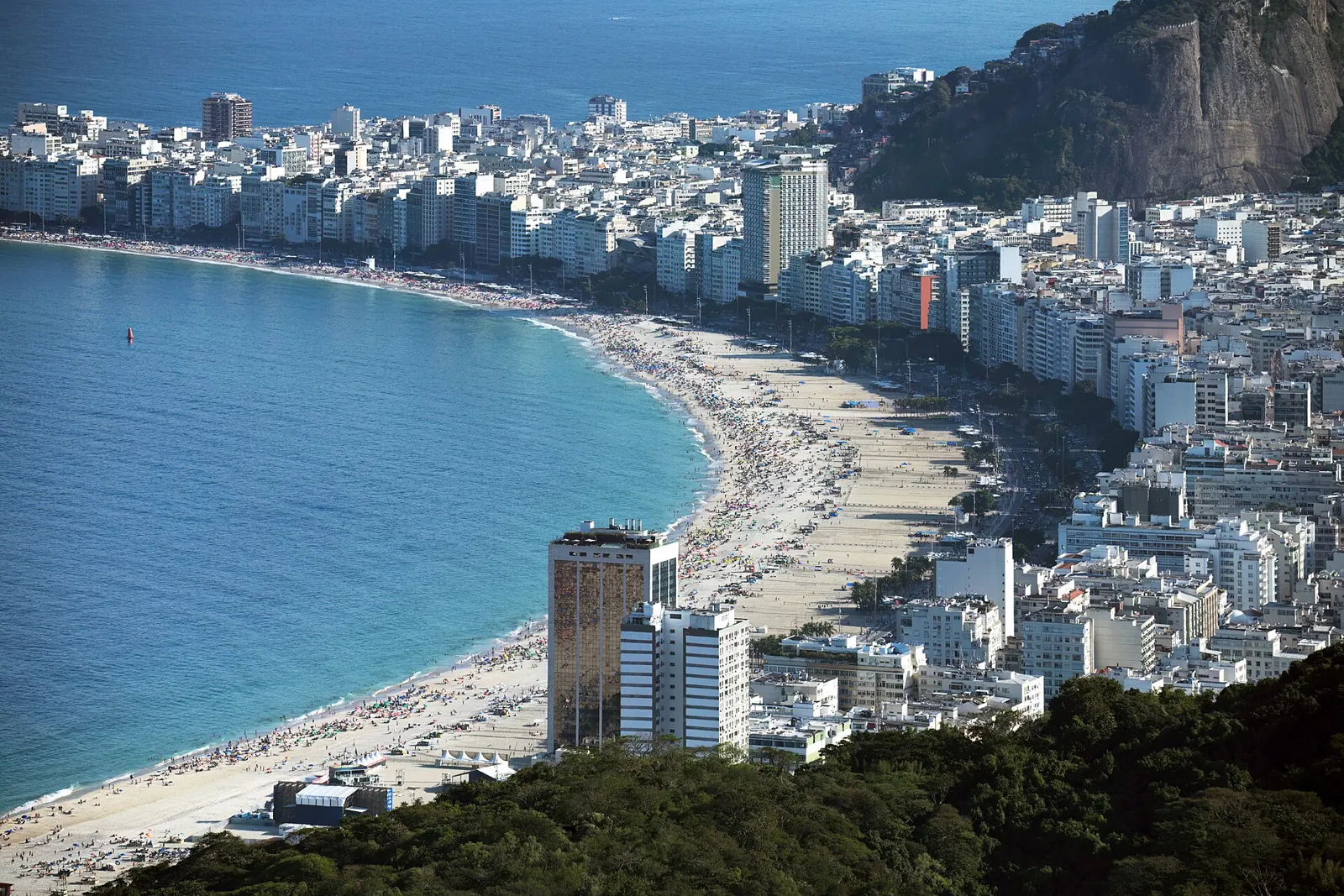
Copacabana packs most of its housing into a narrow plain between the sand and the hills.
Neighborhood figures come from three published sources, and none of the pages opened for this guide presents them as deed prices. FipeZAP and Secovi Rio each use their own method. The plain median of current asks comes from A Corrida dos Bairros. Use the table for relative position and do not quote a single cell as the value of a home.
Sale and rent per square meter by neighborhood
Neighborhood
FipeZAP, Sept 2026
Change in a year
Secovi, Dec 2025
Secovi rent, Dec 2025
Asking median, Nov 2026
Leblon
R$ 28,837
13.2%
R$ 24,939
R$ 115.03
R$ 21,158
Ipanema
R$ 26,996
10.3%
R$ 24,271
R$ 117.66
R$ 19,643
Lagoa
R$ 17,519
1.3%
R$ 16,699
R$ 75.62
not used
Gávea
not listed
not listed
R$ 17,226
R$ 67.24
not used
Jardim Botânico
not listed
not listed
R$ 15,111
R$ 67.44
not used
Barra da Tijuca
R$ 14,561
4.9%
R$ 14,379
R$ 76.71
R$ 13,112
Copacabana
R$ 13,811
9.9%
R$ 11,922
R$ 68.47
R$ 12,114
Botafogo
R$ 13,555
4.2%
R$ 12,770
R$ 69.93
R$ 13,571
Flamengo
R$ 12,833
5.9%
R$ 11,295
R$ 58.31
not used
Laranjeiras
R$ 11,092
3.3%
R$ 10,106
R$ 59.78
not used
Recreio
R$ 7,897
2.9%
R$ 7,734
R$ 42.50
not used
Centro
not listed
not listed
R$ 7,796
R$ 48.03
not used
Tijuca
R$ 7,011
2.3%
R$ 6,558
R$ 32.39
not used
Santa Teresa
not listed
not listed
not listed
not listed
R$ 6,587
Read across and the gaps are large. FipeZAP has Leblon nearly R$ 3,900 above Secovi's December figure, partly because prices rose during 2026. The asking median sits lower again because it counts every listing equally, including the back blocks and old large units. Santa Teresa is missing from both indexes, and its R$ 6,587 for apartments is almost exactly the R$ 6,600 citywide median of that same source. Listing it among premium neighborhoods on price alone would mislead anyone.
Two rankings surprise newcomers. Barra prices above Copacabana and Botafogo on FipeZAP, and Botafogo sits well above the citywide average, not below it. The rent column has its own oddities: Gávea, with a far higher sale price than Copacabana on Secovi, rents for slightly less.
For comparison across cities, FipeZAP's January 2026 reading put Leblon at R$ 25,777/m² and Itaim Bibi, among São Paulo's most expensive addresses, at R$ 19,461/m². Buyers who want a sea-front city at a lower entry price can look at Barra in Salvador, in a market averaging R$ 8,691, or Boa Viagem in Recife, where the city averages R$ 9,045 and FipeZAP's yield is 8.3%. Those are different cities with different risks and flight links, and the numbers only show what the same budget buys.
Long-term renting
Rents rose fastest where landlords had found another option. Secovi Rio's table for December 2025 shows 12-month rises of 35.9% in Centro, 22.4% in Flamengo, 20.6% in Laranjeiras and 17.3% in Copacabana, against 1.0% in Ipanema and 1.3% in Leblon, which had already rerated. On FipeZAP figures in the press, Copacabana's rent more than doubled in five years, reaching R$ 74/m² in 2026. Secovi data quoted that April put the fall in rental listings in the South Zone at 27.5% over two years, and the press links that to short-stay platforms, though the figure does not separate the causes.
Modeled cost of a 60 m² apartment, Data Secovi, September 2026
Neighborhood
Rent
Condominium
Monthly total
Leblon
R$ 7,909
R$ 1,184
R$ 9,094
Ipanema
R$ 7,655
R$ 1,216
R$ 8,871
Gávea
R$ 5,933
R$ 990
R$ 6,923
Barra da Tijuca
R$ 4,809
R$ 1,156
R$ 5,965
Copacabana
R$ 4,816
R$ 888
R$ 5,704
Botafogo
R$ 4,579
R$ 917
R$ 5,496
Centro
R$ 3,566
R$ 998
R$ 4,564
Laranjeiras
R$ 3,644
R$ 864
R$ 4,508
Recreio
R$ 2,553
R$ 740
R$ 3,293
Tijuca
R$ 2,193
R$ 746
R$ 2,939
Those totals leave out IPTU, insurance and utilities. The city's FipeZAP yield of 6.3% is gross, before all of them. Secovi publishes a simpler ratio of rent per square meter to sale price per square meter by zone. For December 2025 it was 0.605% a month in the Central Zone, 0.581% in the South Zone, 0.566% in Barra and nearby, 0.556% in the West Zone and 0.462% in the North Zone, so the cheap North Zone does not automatically pay better.
The Tenancy Law sets the frame here as elsewhere: a landlord may ask for one guarantee only, chosen from a cash deposit, a guarantor, a rental insurance policy or an assignment of fund shares, and a cash deposit cannot exceed three months' rent. No current Rio survey of which guarantee is most used turned up, and neither did a public vacancy figure, so ask a local administrator for the days a similar apartment sat empty in your building. Secovi's count from the state court shows 353 rental lawsuits in the capital in December 2025, up from 299 a year earlier, so budget for a slow exit if a tenant stops paying.
Tenant profiles differ by zone, and this part is a general observation, not a statistic: Botafogo and Flamengo draw young professionals and students from the metro corridor, Barra draws families who want a pool and a garage, and Ipanema and Leblon draw executives and long-stay foreigners on furnished lets. Owners living abroad should read up on tax on rental income before pricing a lease, since withholding changes the net figure.
Short-term renting
No municipal short-let law was found in force as of November 2026, but that could change in a single session. Bill PL 372/2025, by councilman Salvino Oliveira, has been through several versions. An early draft banned short lets on the seafront and was dropped. A 2025 text would have made listing depend on approval by two-thirds of a condominium's residents, with fines of up to R$ 10,000. On 15 December 2025 a special commission approved a softer report, 3 votes to 1, calling for a mandatory registry of properties and hosts, Cadastur registration, express condominium authorization and platform tax duties. The 51-member council still has to vote, opponents say rental is a federal matter, and a press report from April 2026 described the bill as also requiring a license and liability insurance. Check the council's site before you commit.
The condominium is the rule that applies today. Your right to let by the night depends on the building's convention and on the case law summarized in the national guide to short lets. Get the convention plus three years of minutes, and ask the síndico yourself. A building with a doorman log and a past dispute will say so.
Supply is dense. Inside Airbnb data reported in July 2026 counted 48,193 listings in the city and 13,174 in Copacabana alone, with Lapa, Ipanema, Leme and Leblon among the densest areas per square kilometer.
Published market data disagrees, so treat every figure as a range. AirROI's year to September 2026 shows 33,138 active listings, R$ 624 a night, 42.6% occupancy and R$ 71,981 of revenue per listing before costs. Airbtics, for the twelve months to August 2026, gives 32,104 listings, a R$ 413 rate, 59% median occupancy and R$ 92,000 a year. Neither figure is a return on a purchase. To estimate one, take comparable listings in your block, count booked nights on their calendars, subtract cleaning, platform fees, condominium, IPTU and tax, and divide by the full cost of the purchase. Still unsettled at national level: the short-let deduction of R$ 600, and CBS and IBS for non-resident hosts above the limits.
The calendar swings hard. AirROI's monthly average runs from R$ 11,100 in February and R$ 10,500 in January down to R$ 7,120 in October, with occupancy peaking near 55% in February and bottoming near 41% in May. HotéisRIO's Carnival 2026 survey had hotels at 99.02% citywide. A single event weekend proves nothing about the rest of the year, so ask to see twelve months of statements from any seller who quotes earnings.
Short-let arithmetic
Starts from published figures (12 months to September 2026 (AirROI, Airbnb listings). Airbtics for the 12 months to August 2026 shows R$ 413 and 59% median occupancy.). Set your own.
Rio's ITBI, the municipal transfer tax, is 3%. Lei 6.250/2017 amended article 19 of Lei 1.364/1988, raising the general rate from 2% to 3% from 1 January 2018. Calculators and old blog posts still show 2%, and they are wrong for an ordinary purchase.
There is a real 2% case, and it is narrow. Under Lei 6.999/2021 and Decree 54.178/2024, the first purchase of a unit from a new or converted residential building in the Reviver Centro zones is exempt if the deed is signed between 10 October 2023 and 11 October 2028. Outside those dates, the same first purchase pays 1% with household income up to three minimum wages or 2% with income between three and six. A resale of the same apartment pays the normal rate. The Porto has its own version: Decree 55.771/2025 exempts the first buyer of a new residential unit in the Porto special area when the building license was valid on or issued after 9 January 2025, with requests accepted until 9 January 2030. Apply before the deed. The Reviver Centro decree asks for the request at least 15 days ahead, and the decree lets the city withdraw the benefit if any condition is missed, charging the tax as if it had never been granted.
A reduced rate on the financed share is often quoted. Lei 6.250's wording confirms that article 19 has a separate first item, and blogs give 0.5% on the part financed through the Sistema Financeiro da Habitação, but the current wording and any cap could not be confirmed from an official text. Ask the city's ITBI desk before counting on it.
The base is where disputes happen. Under the STJ's repetitive ruling, Tema 1.113, a declared price stands as presumed true unless the city opens a formal process. Rio's tax office has still issued bills on far higher figures. Diário do Rio reported a Copacabana apartment bought for R$ 2.16 million and taxed on R$ 3.972 million, decided in June 2025, and a Santa Teresa house sold for R$ 750,000 and assessed above R$ 2 million in 2022. The court in the Copacabana case applied the STJ rule, and the Santa Teresa dispute held up that sale for many months, so the promise of sale should say which party covers a higher bill and the cost of contesting it.
Notary and registry fees are high by national standards. The press compared a R$ 50 million deed at about R$ 124,800 in Rio with about R$ 64,800 in São Paulo. The state court also published two fee tables in 2026, one to 8 March and one from 9 March, so ask for a fresh quote on the day. One developer told the press that about 80% of its deeds are now signed outside the state; registration still happens in Rio.
Worked example, resale at one million reais
Item
Amount
Who usually pays
ITBI at 3% of the accepted value
R$ 30,000
Buyer
Escritura, the notarial deed, 2026 band
about R$ 5,380
Buyer
Registration at the property registry, 2026 band
about R$ 5,427
Buyer
Subtotal before certificates and municipal service tax
about R$ 40,807, or 4.1%
Buyer
City laudêmio, if the land is city-held, 2.5% of the city's valuation
about R$ 25,000 if the valuation equals the price
Seller, before the deed
The fee bands come from a Rio lawyer's published table for 2026 and are approximate. Other cities are compared in the guide to closing costs.
IPTU, the annual property tax, is 1% on homes, 2.5% on non-residential units and 3% on vacant land under Lei 6.250. The law discounts small bills on a sliding scale, from 60% where the tax is up to R$ 800 to 10% where it is up to R$ 3,000, in the law's 2017 amounts, which are indexed each January. The base is the city's valor venal, generally below market, and the law calls for the value table to be revised every four years, so an old bill may not predict a new one. A 2026 guide gives a 7% discount for payment in one installment, up to 10 installments otherwise, and an exemption below R$ 85,260. The garbage fee, TCL, comes with the IPTU bill. For the national rules, see the property tax guide.
Land charges on top of your deed
A registered Rio apartment can still sit on land with someone else's name on it. Depending on the block, the buyer may meet the federal government, the city, a private family or the Church, each with an annual charge, a sale charge or both. A clean sales contract can stay silent about all of them, which is why this chapter is worth a lawyer's fee.
The federal government
The SPU, which manages federal property, reported 55,919 units in the city subject to terreno de marinha charges in 2016, with 80% of them in Barra da Tijuca, Botafogo, Flamengo and Copacabana, plus Centro, Urca, Castelo, Penha, Ilha do Governador, Cidade Nova, Santo Cristo, Caju, Bonsucesso and Leme. That list is ten years old and the SPU has published no lot-by-lot list since, as far as could be found. Neither Ipanema nor Leblon is on it, which is not proof that a given front-row lot is clear. A 2018 legal article adds that land around the Barra and Jacarepaguá lagoons has since been classed as marine land. You will find the rates and regimes in the marine land guide. For this city the point is that Barra is not exempt because it is new, and that Copacabana and the bay side of Botafogo are named outright.
The city
Rio itself also collects as a landlord. In 2016 the city was collecting its own charges in 22 neighborhoods, worth more than R$ 28 million in 2015. On a sale of city-held land the seller pays a laudêmio of 2.5% of the valuation set by the municipal finance secretariat, not of the price, and must pay it before the deed through the service called Aviso do Foreiro. There is an exit: the Remição de Foro service lets the owner buy out the city's interest for 2.5% of the valuation plus ten years of annual foro, and the city estimates up to 22 days. After that, no more foro and no laudêmio on later sales. If you are buying city-held land at a good price, get the buy-out quoted first.
Private families
The oddest case is Botafogo. On parts of Rua São Clemente, Voluntários da Pátria, São João Batista, Sorocaba and Dona Mariana, some 60,000 properties have been charged foro and laudêmio by private families tied to old land grants, at up to 2.5% of a sale. A 2018 legal article describes similar family charges in São Cristóvão. The residents' association sued in 1998, and a May 2026 press report said judgment was set for 10 June. No published result could be found by November, though some owners have won individual cases. Ask the seller's lawyer for the current position and for the receipt of the last payment.
The Church
The same 2018 article lists the Catholic Church among those charging under the old enfiteuse system, without naming orders or streets. Treat the word foreiro in a registry record as a question to be answered, whoever appears as the holder.
Buildings the city has not approved
Two situations need separate care. First, the unit or rooftop that was added without a license. Lei Complementar 281/2025 and 291/2025 let owners legalize extra floors for a payment to the city, and on 17 September 2026 the state court's special panel froze the rules, barring new approvals and new applications until a final ruling, while protecting licenses already issued. A seller who promises to legalize an addition later has no route for now. Compare the habite-se (occupancy certificate) with what you see on site.
Second, the informal building. In April 2019 two illegally built buildings collapsed in Muzema, next to Barra, and killed 24 people. Prosecutors say a militia there sold and rented irregular units, and at least 23 irregular buildings in the community were demolished between 2021 and 2023. Such homes are sold on contracts with no registered title, sometimes close to expensive addresses. To learn what such a contract gives you, turn to the posse and escritura guide; for the searches to run, see the title check steps. Foreign buyers should also know the limits on rural land if a Green Coast or mountain plot is on the list.
Height limits and heritage districts
Much of the South Zone is inside an APAC (Área de Proteção do Ambiente Cultural), the city's cultural protection district. Inside one, a building is either protected or merely supervised, and either way works need approval. Rio has been redrawing these lines, so an old broker's answer may be out of date.
The biggest change is Decree 58.245 of 1 July 2026, the APAC Bossa Nova. It covers about 750 buildings from the seafront to the second block inland in Ipanema and Leblon, lists 17 properties and the Portuguese-stone promenade, and caps new buildings and additions at 20 meters in named stretches, including parts of Avenida Vieira Souto, Avenida Delfim Moreira and Rua Prudente de Morais. Windowless side walls are banned, projects must show they cast no shadow on the beach, and a rebuild after demolition follows the new limits. A law firm's alert notes that the decree sets no transition for projects already licensed, and the head of Ipanema's residents' association told the press that a 19-floor building, already authorized, is going up next to hers. Before paying a premium for a sea view, find out what the vacant lot beside it was licensed for.
It sits over older districts. The Ipanema APAC (Decree 23.161 of 2003) had a 12-meter limit and the Leblon APAC (Decrees 20.300 of 2001 and 28.223 of 2007) set tiers at 11, 16 and 26 m. The 2001 Leblon decree forbids demolishing a preserved building, whereas a supervised building may change or give way to a new one once approved. Ask which class your building is in, because it decides whether a developer could ever replace it.
In Copacabana two districts matter. The Lido APAC, from 1992, covers 84 buildings near the Copacabana Palace, down to facade materials, statues, stained glass and doors. Bairro Peixoto, under protection from 1989, has a 15-meter ceiling, and on 1 September 2026 the city council upheld a veto of an amendment that would have allowed about 11 floors there. The seafront itself has been listed by the state since 1991 and by the city since 2009, and the wider landscape has been a UNESCO site since 2012.
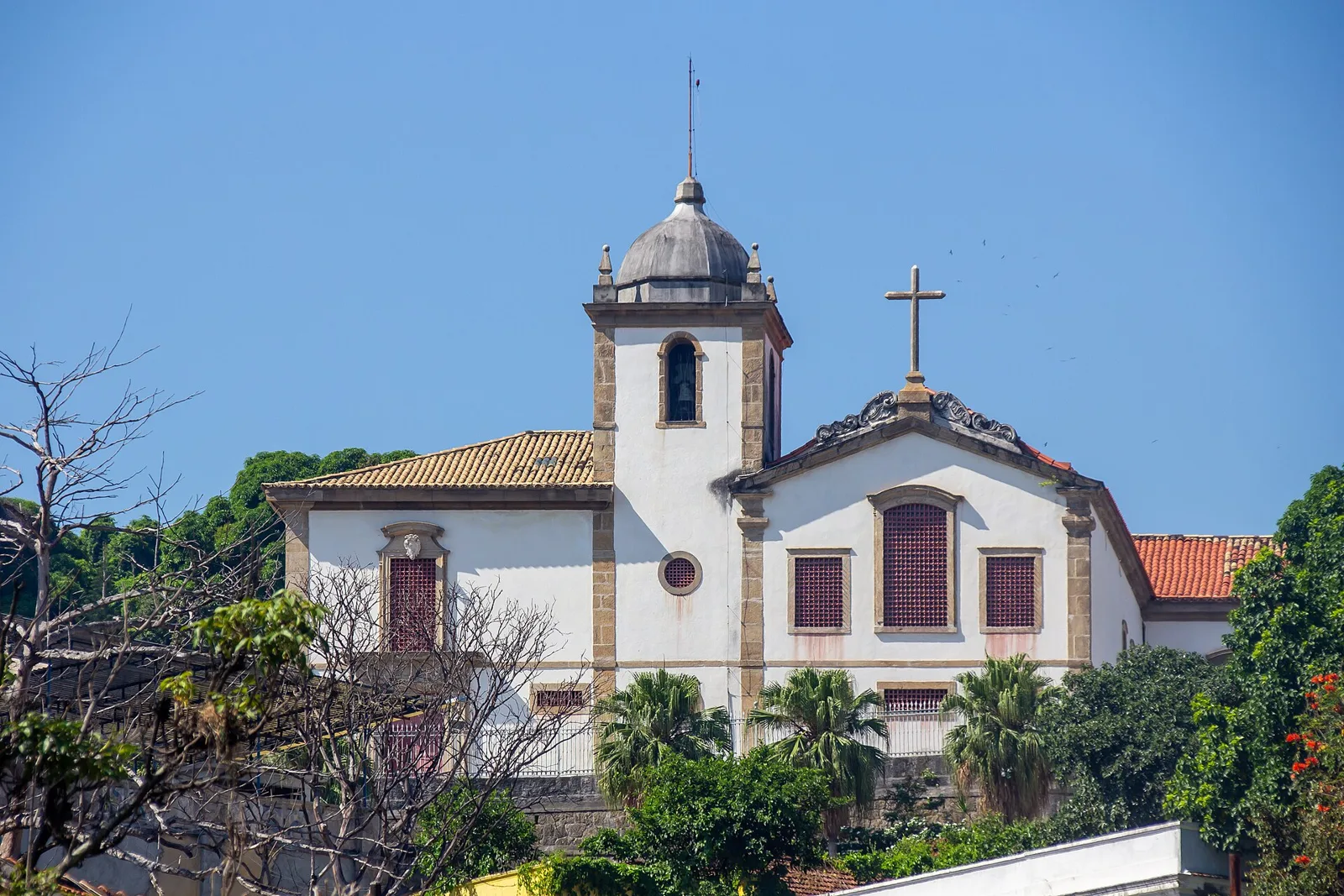
Centro has the Corredor Cultural, set up by Lei 506 of 1984 and revised and widened by Lei 1.139 of 1987. A UNIRIO study credits it with preserving about 1,300 buildings, and says the rules keep the volumes of old streets such as those of the SAARA. A local history site dates Santa Teresa's protected area to 1984, and 2013 minutes of a city council say protection began that year with the Corredor Cultural and spread later to Santa Teresa. The founding decree could not be opened, so that date and the exact boundary remain unconfirmed; have your architect pull the text from the city. The Santa Teresa page covers how that plays out house by house.
The procedure is IRPH Resolution 3 of 2021. The heritage institute, IRPH, has up to 20 days to issue requirements and 10 more to rule after you comply, and the clock stops if the heritage council or another body must weigh in. It also has a specific checklist for volume changes or demolition of buildings from before 1938. Federal and state bodies, IPHAN and INEPAC, have their own say on assets they have listed, and INEPAC refused a repair of the Copacabana promenade in 2024 after concert damage, which shows they do check. Budget months, and make your purchase offer conditional if the plan depends on altering the unit.
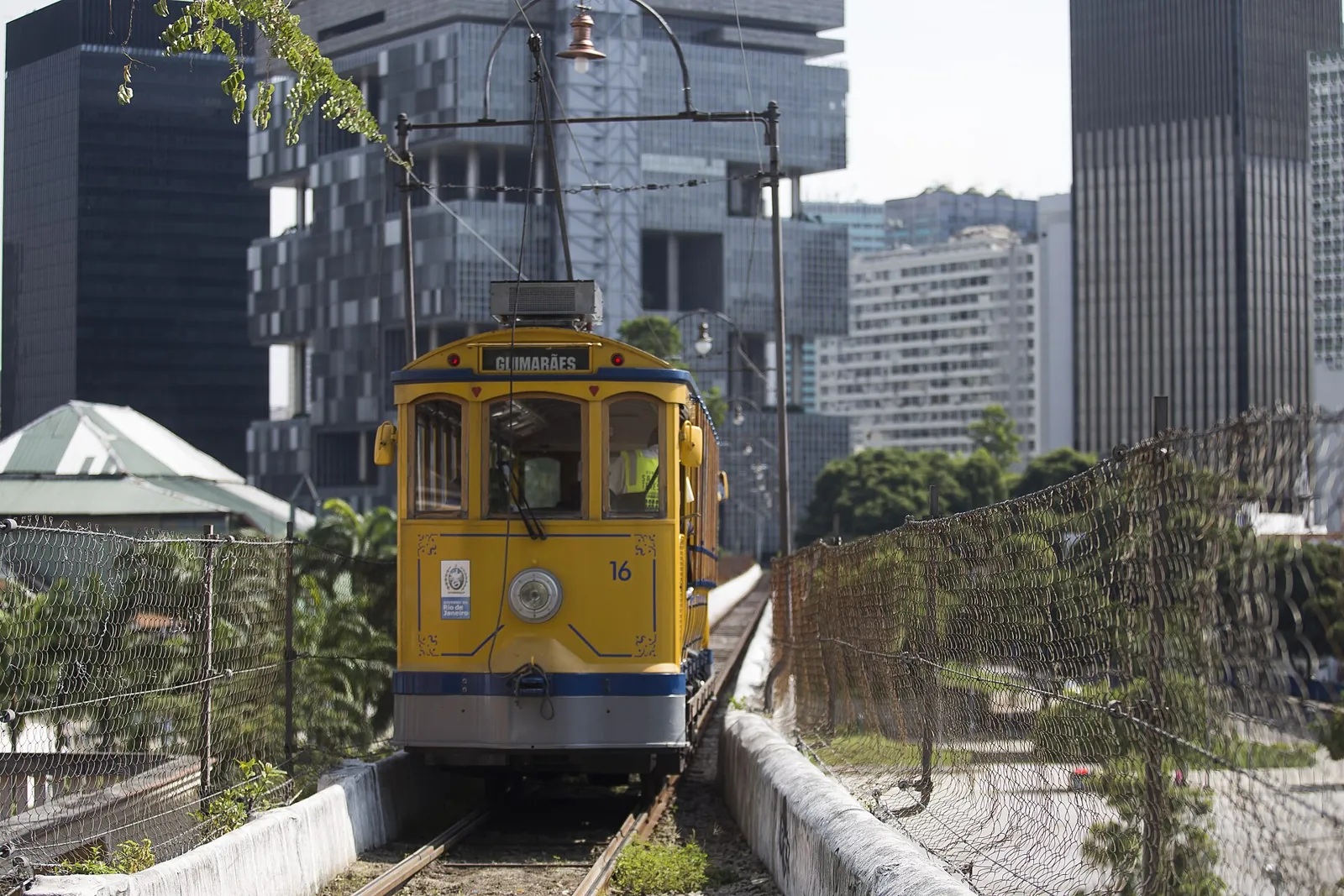
The Santa Teresa tram leaves Centro's office district and climbs into a protected residential hill.
Rio's main physical risk is water coming off the hills faster than the plains can drain it. On 1 April 2022 Rua Jardim Botânico reached 1.10 meters, by the mayor's own figure, and the Praça da Bandeira reservoir, which takes the Maracanã river, overflowed for the first time when heavy rain met high tide. A June 2017 storm flooded roads in about 15 neighborhoods including Jardim Botânico, Lagoa, Catete, Copacabana, Maracanã, Tijuca and Rio das Pedras. February 2026 was reported as the wettest February in 30 years, with 354 mm against an average near 118 mm, and Alto da Boa Vista, Tijuca and Jardim Botânico among the worst hit. The pattern repeats: the streets at the foot of the Tijuca massif and those near the lagoon take the water first.
In Barra the issue is the lagoon system. Silting has left parts of the lagoons only 30 centimeters deep, which limits exchange with the ocean. Iguá, the sanitation concessionaire, is dredging at a cost of R$ 250 million, starting beside the Península condominium; state prosecutors put progress near 25% in May 2025. Many of Barra's buildings, as a general observation, stand on low ground beside that water, and it is worth asking for the foundation history and looking for settlement cracks in the garage levels.
Slopes are the deadliest risk, though not usually for a formal apartment block. The city says it runs 164 landslide sirens in 103 communities, concentrated in the South and North zones. The system has not grown since 2011, and a 2022 audit found many communities around the Pedra Branca massif in the West Zone with no sirens and no geological study. If a house or a building backs onto a slope, ask Geo-Rio, the city's slope agency, for any record on the lot. The flood and landslide guide covers official maps. Santa Teresa buyers should treat this as a required step.
The sea is the slow risk. A Coppe-UFRJ study reported in 2025 found Copacabana had lost roughly 10% of its sand in ten years, and it projects a 0.78-meter rise by 2100, with more than 100 meters of advance on the coast by the end of the century under its model. It names Leme, Ipanema, Leblon, Botafogo and Flamengo among the beaches at risk of losing sand. Those are model results and do not forecast a given building. A front-row apartment does pay for its view with salt on window frames and air-conditioner casings. Check the condominium's facade work in the minutes.
Lagoa Rodrigo de Freitas sits behind Ipanema and Leblon, and the streets on its Jardim Botânico side are among the city's known flood points.
Brazil's yearly public security report, the Anuário, counted 1,375 violent deaths in the city in 2024, a rate of 20.4 per 100,000, well under half of Salvador's 52 that year. Statewide, the ISP, the state's public security institute, recorded 1,242 victims of violent death in January to April 2026, down 10.8% on a year earlier, and street robbery down 20.4% to 16,849 cases. Those are state figures, because the institute's press summaries rarely isolate the capital. None of this describes your block.
The figure that surprises foreigners is territorial. The Mapa Histórico dos Grupos Armados, by UFF's Geni group and Instituto Fogo Cruzado, published in December 2025, puts about 4 million people, about a third of the metropolitan population, under the control or influence of armed groups in 2024. Inside the capital it maps 157 km² for militias, 34 km² for the Comando Vermelho, 15 km² for the Terceiro Comando Puro and 5 km² for Amigos dos Amigos. In the West Zone, militias account for 90% of the area and 80% of the people under some form of control or influence, and disputes with the Comando Vermelho have intensified since 2023. The study also says the population under control has been falling since 2019. Its most useful finding for a buyer is that 59.9% of militia-controlled areas are ordinary formal streets, not favelas, so a registered house with a deed can still sit under such control. Muzema shows what that can mean for building and sales. The map is public: check any West Zone address on it before visiting.
In the South Zone the hills matter block by block. Rocinha and Vidigal border Leblon and São Conrado, and the map's authors date the Comando Vermelho's takeover of both to 2018. The police operation of 28 October 2025 in the Penha and Alemão complexes left 122 dead by one published count, and the study's commentators say it did not change the picture of control.
Street crime is the daily issue. The ISP counted 36,158 phones taken in the city from January to August 2025, the highest since 2003, about one every ten minutes. The most affected areas were Centro and Lapa with 2,984, Catete, Flamengo and Glória with 2,494, and Barra, Joá and Itanhangá with 1,990. Residents choose by small details, and these are general observations: how far the building is from the nearest favela entrance, whether the street has night-time shops, whether the doorman is on duty around the clock. Walk from your door to the metro after dark, and ask the doorman what happened last month.
Hospitals, schools and shops
Private hospitals cluster where the money is. Rede D'Or lists Copa D'Or in Copacabana, with its Copa Star unit on the same street, Hospital Jutta Batista in Botafogo, Clínica São Vicente in Gávea, Barra D'Or in Barra, Glória D'Or in Glória and Quinta D'Or in São Cristóvão. Santa Teresa has none of these on the hill, so time the drive to Glória or Botafogo at night. Budgets are listed on a separate cost page.
The international schools shape where families look. The British School has early-years and primary in Botafogo on Rua Real Grandeza, secondary in Urca on Avenida Pasteur, and a primary and secondary campus in Barra; it provides IGCSE and the IB Diploma. Escola Americana has campuses on Estrada da Gávea and on Rua Colbert Coelho in Barra, with the IB Diploma in grades 11 and 12. The Swiss-Brazilian school sits in Barra on Rua Corrêa de Araújo, and its 2027 fees start at R$ 77,670 a year and top out at R$ 126,975. A guide also places Our Lady of Mercy in Botafogo and Rio International School in Barra. Families commuting between Gávea or Botafogo and Barra should check those trips at school hours, since Line 4 helps only near a station.
Foreign residents, as a general observation, concentrate in Ipanema, Leblon, Copacabana, Botafogo and Barra, and each has English-speaking clinics and furnished-let agents. Santa Teresa has a long-standing artist and foreign community on a smaller scale. Rio also received 884,500 foreign arrivals in the first quarter of 2026, the most of any state a July press report cited, so foreign faces in the South Zone are often tourists, and the shops around them price accordingly.
Among INMET's 1991-2020 normals, one station lies inside the city, Alto da Boa Vista, up in the Tijuca forest. Highs there run from 30.6°C in February to 24.1°C in July, and lows from 21°C to 15.1°C. Its 2,415 mm of rain a year places it at the wet extreme of the city, since the forest hills catch far more than the beach plain: it shows 178 mm for February, while a forecaster cites about 118 mm for the city. Treat its figures as a ceiling. Rain is spread through the year there, with March, November and December the wettest and August the driest at 150 mm.
A summer visit shows you the truth about flooding, air conditioning and noise. December to March is also when AirROI's short-let demand peaks. Afternoon storms are when to walk the street you want and see where the water goes. A July or August visit shows a calmer city, but it hides the things that cost money: damp, drainage and how hot a west-facing apartment gets.
Carnival and New Year change daily life in specific places. Riotur's forecast for Carnival 2026 was more than 8 million people, and the street program ran to 462 bloco parades, with hotels at 99.02%. New Year 2026 was planned for 2.5 million people in Copacabana. A parking ban began on 30 December, at 6 a.m., in parts of Copacabana, Ipanema, Leblon and Botafogo; private cars were kept out from 7 p.m. on the 31st, all traffic from 9 p.m., and reopening began at 5 a.m. Security searches ran on 17 beach-access streets. The next owner of an Avenida Atlântica apartment should ask how residents reached their garage that night, because no published rule could be found.
Those same dates are the best trading days of the year if the building permits short lets, and the worst days to arrive for an inspection. Notaries and offices also slow down. Plan a buying trip for March to June or August to November, and keep one rainy day for the street walk.
Press a month
JFMAMJJASOND
Bars show rain. Alto da Boa Vista, INMET code 83007, in the forest hills; the beach plain is warmer and much drier, 1991-2020. Source.
Flights, metro and the two airports
Galeão, about 18 km from the center, changed hands in 2026. Spain's Aena won the federal auction in March with a bid of R$ 2.9 billion and took over on 6 October. It handled 17.5 million passengers in 2025 and projects about 19.4 million for 2026, against a capacity of 37 million. Santos Dumont, the downtown airport on the bay, has been capped at 6.5 million passengers a year since 2023, and supporters of the cap credit it with reviving Galeão. In February 2026 the federal government said it would revoke an order that had loosened the limit. The later schedule reported in October has the cap at 8.5 million in 2027 and 9.5 million in 2028, and gone in 2029.
Aena's October 2026 plan names current routes it is adding frequencies to: Paris, Miami, Frankfurt, Lisbon, Porto, Santiago, Córdoba, Atlanta and Panama City. Brazil Journal's account has American starting a daily New York flight in October, with Miami going to nine a week, Air Canada starting three a week to Toronto, Lufthansa going daily to Frankfurt in November, and Delta adding three a week to New York. In May 2026 Gol listed Buenos Aires, Córdoba, Rosario, Montevideo and Asunción from Galeão and announced New York from July. December is due to bring Montreal, Dallas, Lima, Salta and Mendoza. Melhores Destinos reported in May 2026 that U.S. flights to Rio are generally seasonal, October to March, and that Gol flies to Mendoza only in high season. The airport's own page would not open and the airline pages tried did not confirm the list, so check the airline's site and ask whether a route runs all year.
From the city, the metro serves a narrow strip. Line 1 and Line 2 share the corridor from Botafogo through Flamengo and Catete to Centro, and Line 4 links Ipanema and Leblon to Jardim Oceânico. The missing piece is Gávea: work stopped in 2015, restarted late in 2025, and the station is now expected in 2028. Beyond Jardim Oceânico, Barra relies on buses, BRT and cars. To Galeão by public transport, the BRT Transcarioca connects to metro Line 2 at Vicente de Carvalho.
Praia do Pepê at the eastern end of Barra, about an 18-minute walk from the metro at Jardim Oceânico.
Several rules changed during 2026, and some are still moving. In order of how much they affect a buyer:
The APAC Bossa Nova of July 2026 limits new height near the beach in Ipanema and Leblon, and its 20-meter limit applies only to named stretches.
The state court's September 2026 order froze Lei Complementar 281 and 291 of 2025, stopping new approvals for extra floors, more building rights and hotel-to-home conversions that rely on those laws. Existing licenses survive, so a licensed project next door can still go ahead.
Praça Onze Maravilha, passed by the council on 27 May 2026, plans 37,000 homes around Praça Onze with the demolition of the Elevado 31 de Março. Developers there can earn building rights to use elsewhere. The Reviver Centro version of this same mechanism let those rights land in Copacabana and Ipanema/Lagoa, and Diário do Rio reports the new text reduces South Zone incentives and adds North Zone ones. Bairro Peixoto was removed after a veto. Check the final list of receiving areas in the official gazette.
Reviver Centro's benefits have a clock: Decree 54.178 sets a general condition that the works got their first license by 1 August 2026, a date now past, while the exemption for first purchases runs to October 2028. Ask the ITBI desk whether a given project qualifies.
The short-let bill PL 372/2025 awaits a council vote.
Galeão has a new operator, Santos Dumont's cap is scheduled to rise from 2027, and the Silvestre branch of the Santa Teresa tram returned to service in June 2026.
The master plan behind all this is Lei Complementar 270 of 2024, and prosecutors challenging the 2025 laws argue that they may conflict with it and skipped a new round of public participation. The federal tax reform will also change how rent is taxed from 2027, as the rental income guide sets out, and Rio's bill dropped its ISS clause on the assumption that the new tax will cover the sector.
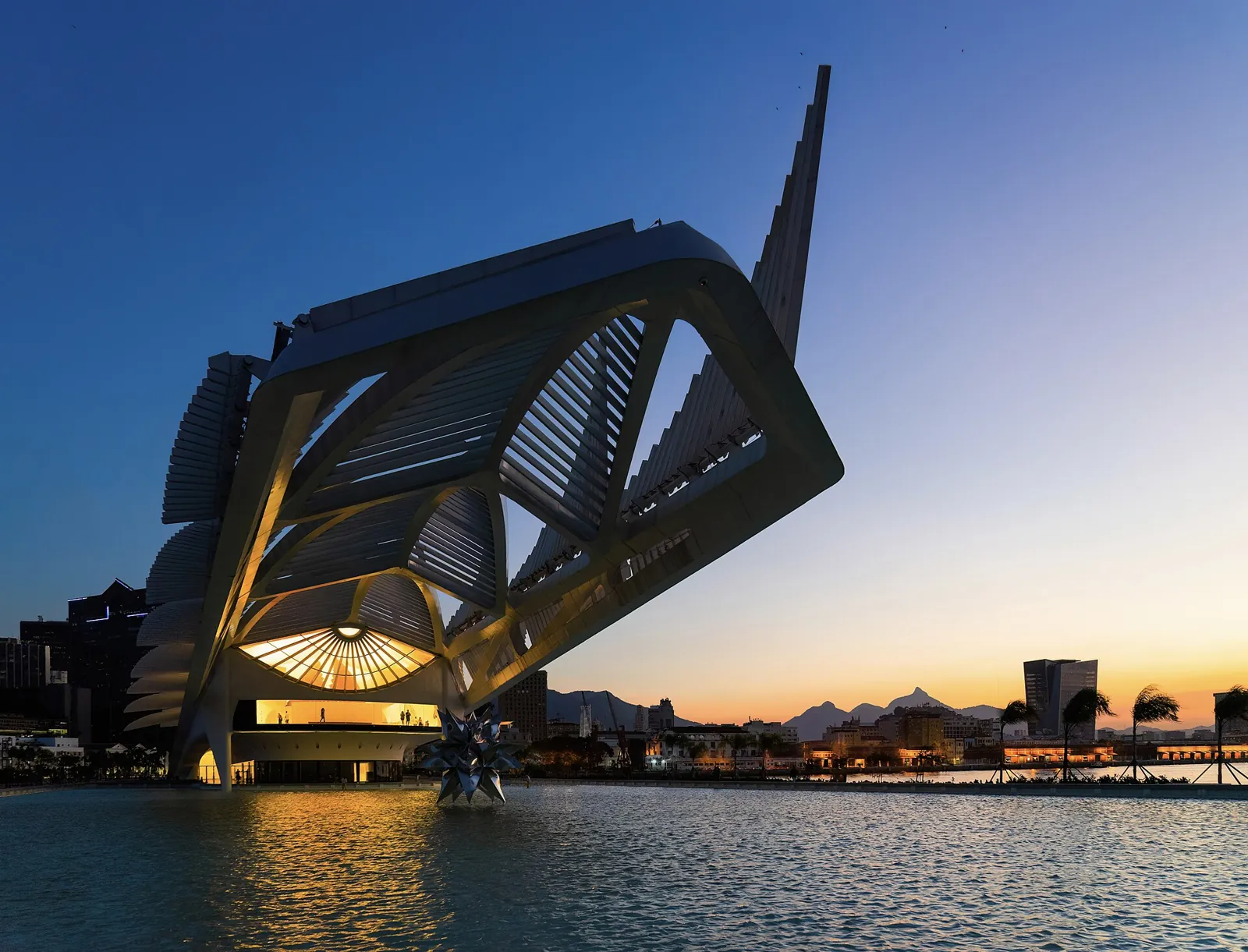
The Museu do Amanhã stands in the Porto, the area with the most new-home sales in the 2025 report and its own ITBI exemption for first buyers.
No public source could be found for how long Rio apartments take to sell, so be wary of any number quoted to you. What is available points to a split market. Loft's listing survey had units of 30 m² to 65 m² up 13.3% in 2026's first five months, against 10.8% for the city and 7.2% for units under 30 m². Compact units are also where outside buyers and short-let investors focus. Large old apartments are the other end: Copacabana's November 2026 listings include more than 800 over 150 m², nearly half of its apartments for sale, at the neighborhood's lowest price per m². A buyer of a 200 m² home on Avenida Nossa Senhora de Copacabana should assume a smaller pool of purchasers and plan for a longer wait.
Who buys next depends on the address. In Ipanema and Leblon, press reports describe supply kept short by land scarcity and height rules, with buyers from other states and abroad. In Barra, resale competes with heavy new supply, with 15,528 units launched from 2021 to mid-2026 and 12,007 sold. In Centro, a resale pays full ITBI while a new unit next door may pay none until October 2028, and that gap is a discount your buyer will notice. In Santa Teresa and in Bairro Peixoto, protection limits what a developer can do, so the buyer is an occupier and not a builder.
Prepare before listing. Have the autovistoria report, three years of minutes, the IPTU status and any laudêmio position ready; if the land is city-held, the laudêmio has to be paid before the deed, and that cash comes from you. Keep every receipt for improvements, since capital gains is worked from your documented cost. The selling guide covers tax and moving the money home, including the 3.5% IOF on proceeds, still unsettled. Owners can list at no charge on the Brazil Keys listing page and compare with asking prices in the market index.
What goes wrong in Rio de Janeiro
A 2% ITBI quote
Calculators still show 2% for Rio. The rate has been 3% since 2018, and the 1% and 2% rates apply only to first purchases in Reviver Centro zones outside the exempt dates. On a million-real purchase the mistake costs R$ 10,000. Ask the notary to run the tax on the real address, and see the tax guide.
City valuation above your price
The STJ favors the declared price, yet Rio has issued bills on far higher figures, including R$ 3.972 million on a Copacabana apartment bought for R$ 2.16 million. Winning takes time. Write into the promise of sale which party bears any extra tax, and ask your lawyer what the city assessed on similar units in the building.
A laudêmio nobody mentioned
Land may carry a federal, city or private charge, and the word foreiro may sit quietly in the registry record. In Botafogo, stretches of São Clemente, Voluntários da Pátria, São João Batista, Sorocaba and Dona Mariana have a private charge under dispute. Read the full matrícula, ask for the last receipts, and hold back money until the seller shows the laudêmio paid.
An unlicensed extra floor
Rooftops and additions are often sold as if legal. The court order of September 2026 stopped new legalization under Lei Complementar 281/2025, so an owner can no longer promise that route. Compare the habite-se with the actual area, and walk away from a price that assumes future legalization.
Buying the view without the zoning
The July 2026 APAC Bossa Nova limits new height, but the alert from one law firm says it is silent on projects already licensed, and residents report tall buildings going up. Pull the license history of the lots around you at the city's planning desk before you pay for a sea view.
Short-let income from a banned building
Copacabana's listing count makes short lets look automatic. Your convention may forbid them, and bill PL 372/2025 could add a registry and condominium vote. Read the convention and minutes and speak to the síndico first, and do not rely on a seller's calendar from Carnival.
An address under armed control
Most militia-controlled areas in the 2024 map are ordinary streets, not favelas, so a house with a good deed in the West Zone can still be inside one. Check the published map, and ask a local lawyer who collects for gas, internet and vans on that street.
A large old apartment priced at the median
Neighborhood averages lean on small units. In Copacabana, listings over 150 m² ask about 40% less per square meter than those under 50 m², and those same large apartments carry bigger fee and repair bills. Compare with the same size band, get the autovistoria report and check the minutes for facade work.
It is 3% for an ordinary sale, under Lei 6.250/2017. That comes to R$ 30,000 on a million-real purchase. New first purchases in the Reviver Centro and Porto areas have their own exemptions, covered in the taxes chapter above and in the guide to closing costs.
Which Rio neighborhood is the most expensive?
Leblon, at R$ 28,837/m² on FipeZAP's September 2026 reading and R$ 24,939 on Secovi's December 2025 table. Ipanema follows closely on both.
Is Rio more expensive than São Paulo?
Not on average. On FipeZAP, Rio's R$ 11,302/m² trails São Paulo's R$ 12,206/m². Leblon and Ipanema do cost more than São Paulo's top neighborhoods, such as Itaim Bibi.
Can I rent out my Rio apartment on Airbnb?
As of November 2026 no city law was found banning or licensing it, yet in practice the building's convention decides, and bill PL 372/2025 is pending. Begin with the building's rules, then check the national short-stay rules.
Does Barra da Tijuca have terreno de marinha?
Yes, in part. The SPU named Barra in 2016 among areas with many charged units, and its lagoon edges have drawn new claims. Read the matrícula and SPU record for the specific lot, with the terreno de marinha guide at hand.
In Rio, what is the laudêmio on city-held land?
2.5% of the valuation set by the city's finance secretariat, paid by the seller before the deed. An owner can end it for good through the Remição de Foro service by paying the same 2.5% plus ten years of foro.
How many violent deaths does Rio have?
The Anuário counted 1,375 in the city in 2024, or 20.4 per 100,000. The state figure fell 10.8% in January to April 2026 against a year earlier. Rates vary hugely within the city, and no official figure describes one block.
Are armed groups a problem for property buyers?
In parts of the city, yes. The armed-groups map in its 2025 edition shows militia control across much of the West Zone, including ordinary streets. Check the address on the map, and read the title carefully, since illegal building and sales have been documented in places such as Muzema.
Which airport should I use for Rio?
The international routes listed in this guide fly from Galeão, about 18 km from the center and run by Aena since October 2026. Santos Dumont, downtown, has a 6.5 million passenger cap, due to rise from 2027.
Can I rebuild or add floors to a building in Ipanema?
Only within APAC limits, which since July 2026 include a 20-meter cap on named stretches near the sea, and with IRPH approval for protected or supervised buildings. Legalizing past additions under the 2025 laws is frozen by court order.
Which time of year is best for inspecting property in Rio?
Go once in the wet summer months if you can, to see drainage and heat, and avoid the days around New Year and Carnival. March to June and August to November give you open offices and a calmer street.
How quickly do apartments sell in Rio?
No public source reports it. Get recent closings in the building from a broker, and expect compact units to find buyers faster than large old ones, since over-150 m² listings make up nearly half of Copacabana's supply.
We use cookies, including Google Analytics, to understand how visitors use this site. You can accept or decline non-essential cookies. See our Privacy Policy.